From a brand guideline to the TVs in the store.
The b. mark, bag stickers, totes, uniforms, gift cards and India menu boards for Blenz Coffee, a Vancouver coffee franchise. Designed at FSH Design by Jastej Sehra, Senior Product and AI Strategist.



One brand, built as a system
The need
Blenz needed one brand that held together across bags, uniforms, cards, menus and a new store in India.
The approach
Instead of designing one deliverable at a time, the work began as a system: a collection-based library of marks, colours, type, patterns and layouts. A shared kit of parts that every piece is built from.
The result
Every new piece starts from that library, so it arrives on-brand, quickly, and can scale to the next product, store or market.
Brand foundations
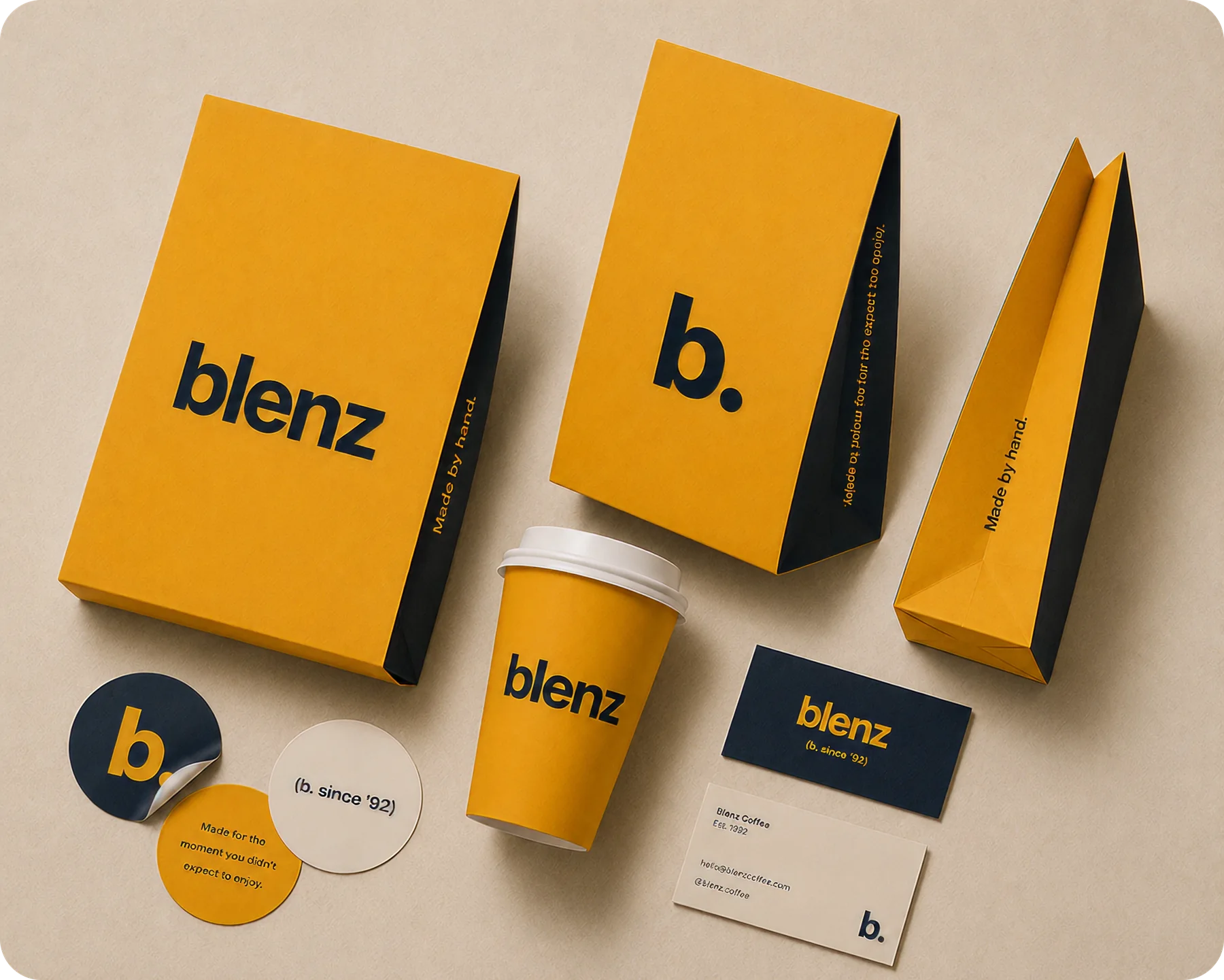
The b. mark, the guideline, the logo kit and a set of brand-direction renders: the library every other piece draws from.


The b. mark and the wordmark. One heavy lowercase letter and a full stop, built to hold up at the size of a tumbler print or a storefront.
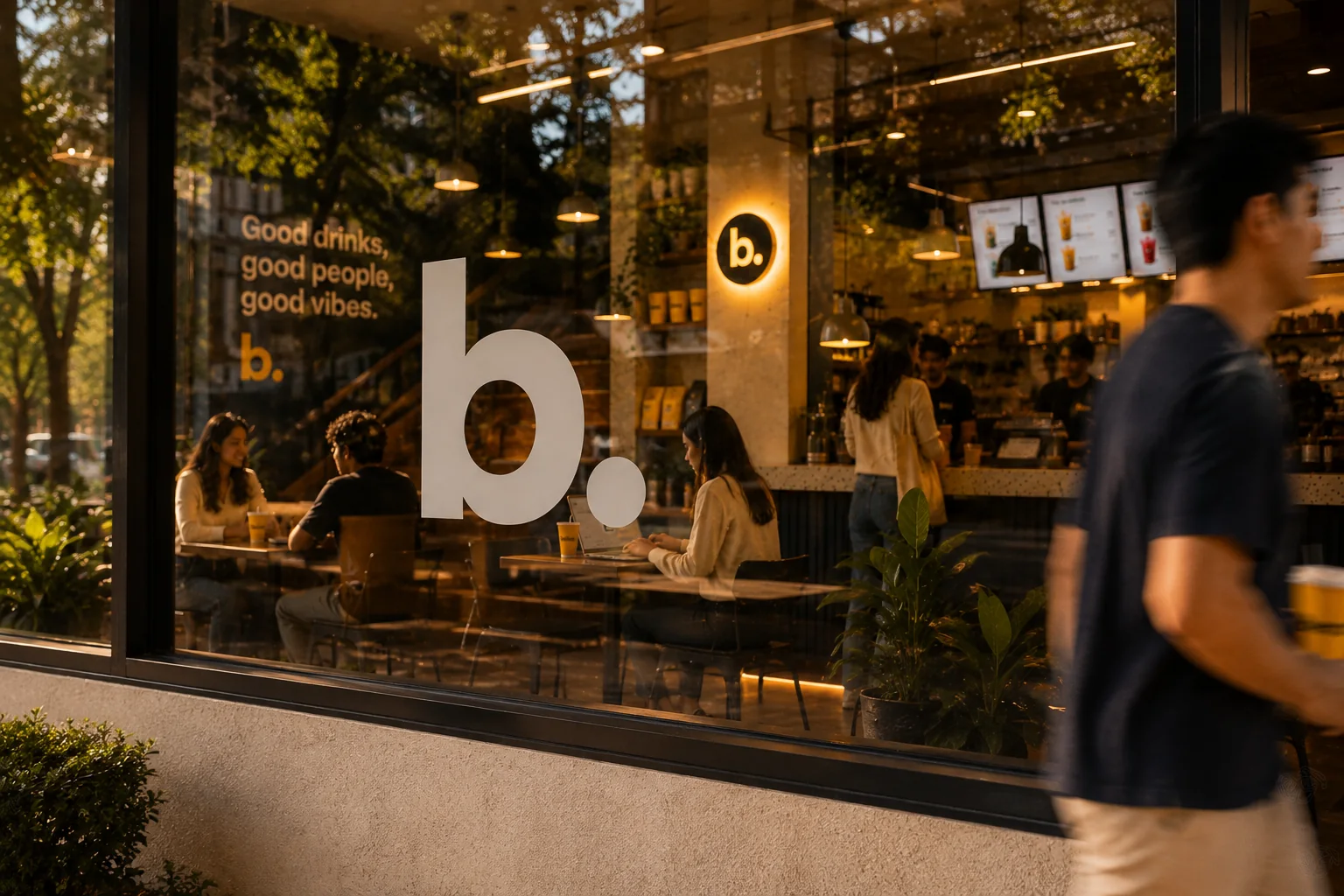
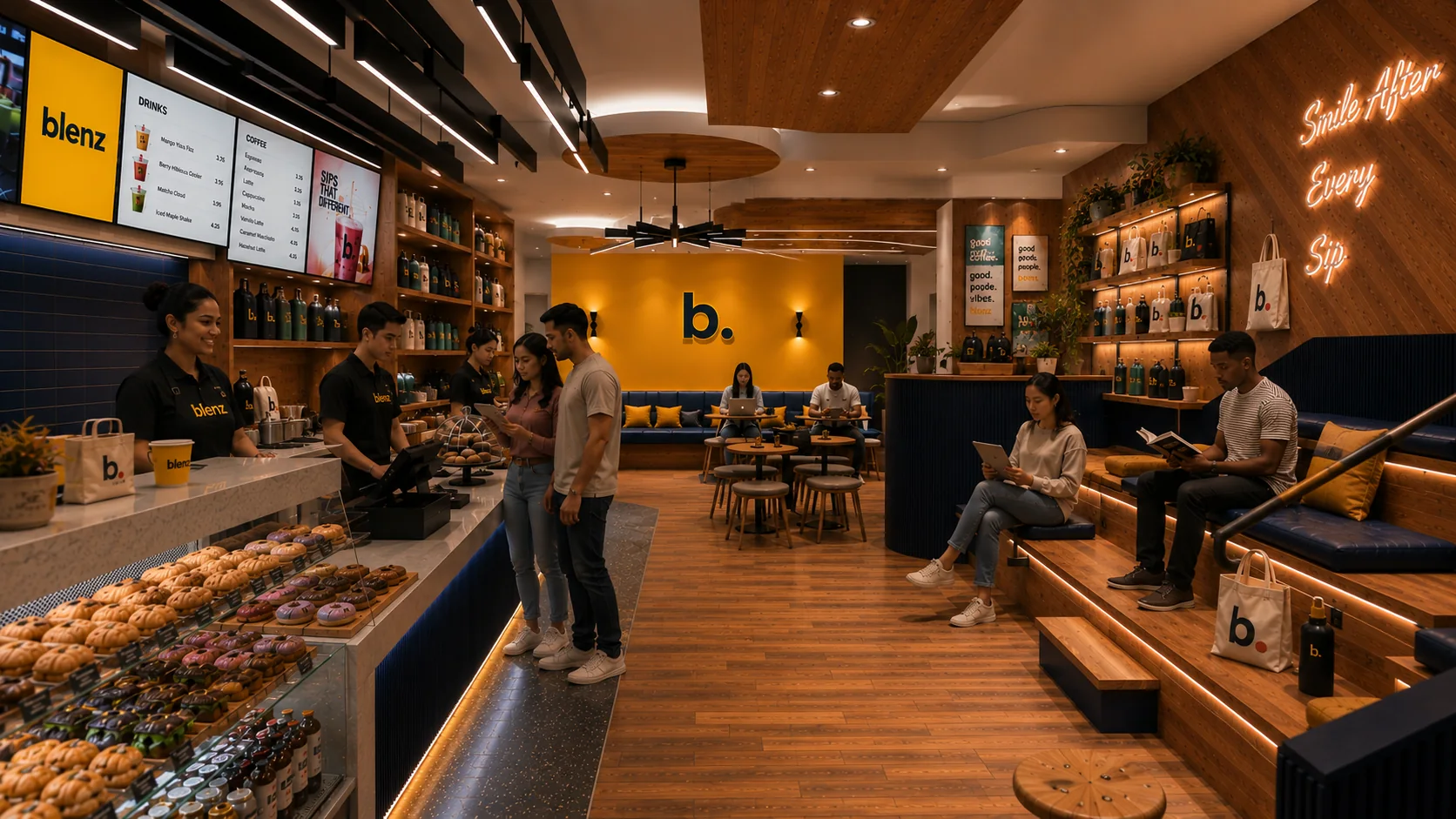
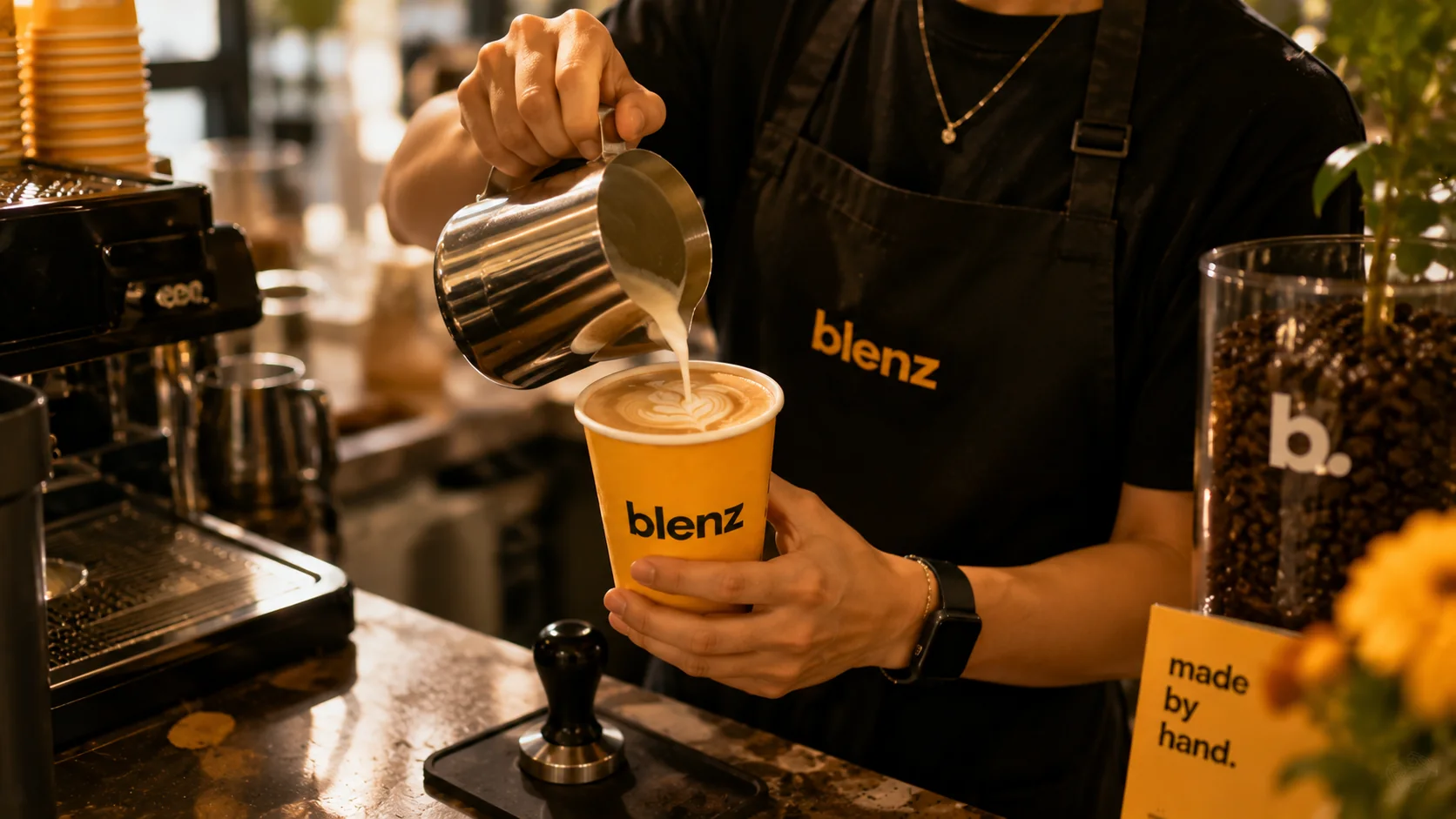
Brand-direction renders. Concept imagery made with generative tools to set the look and feel of a Blenz store. They are not photographs of a real location.
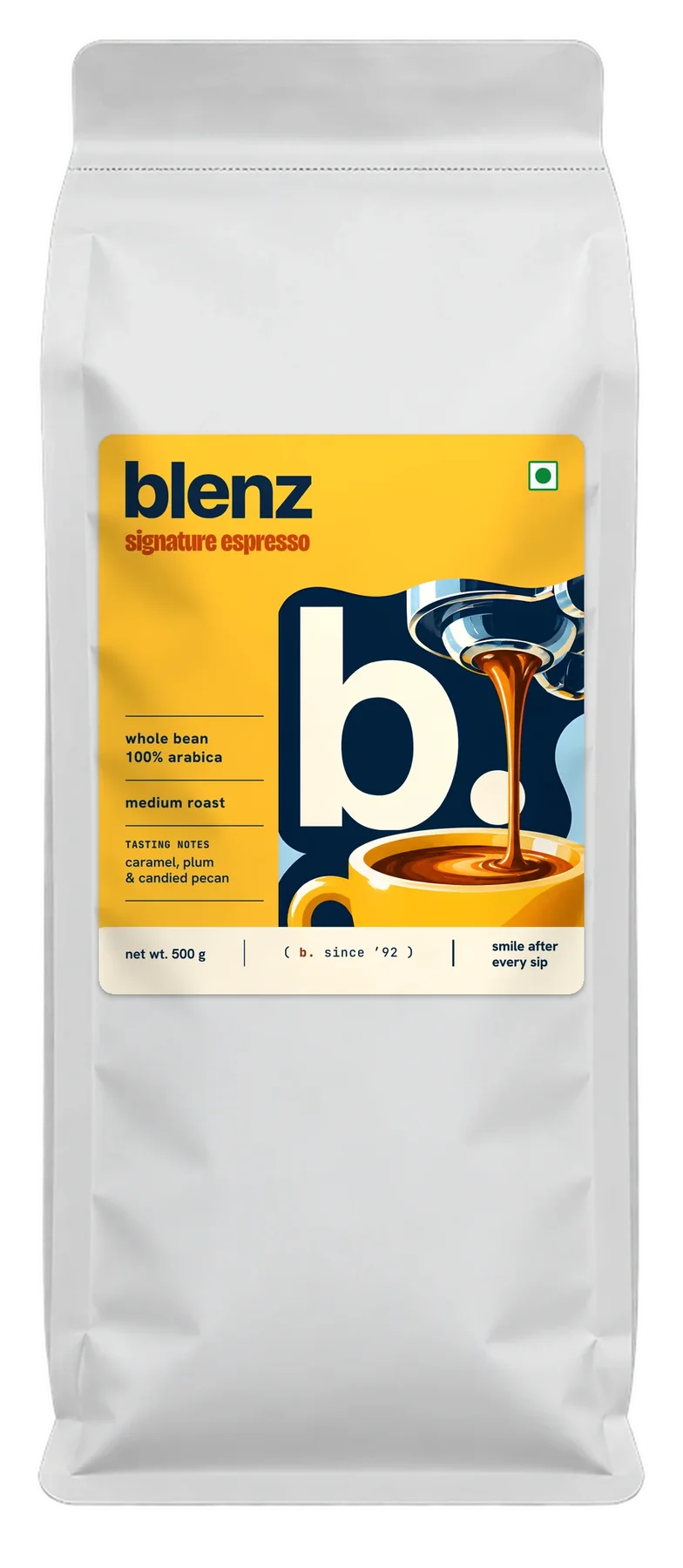
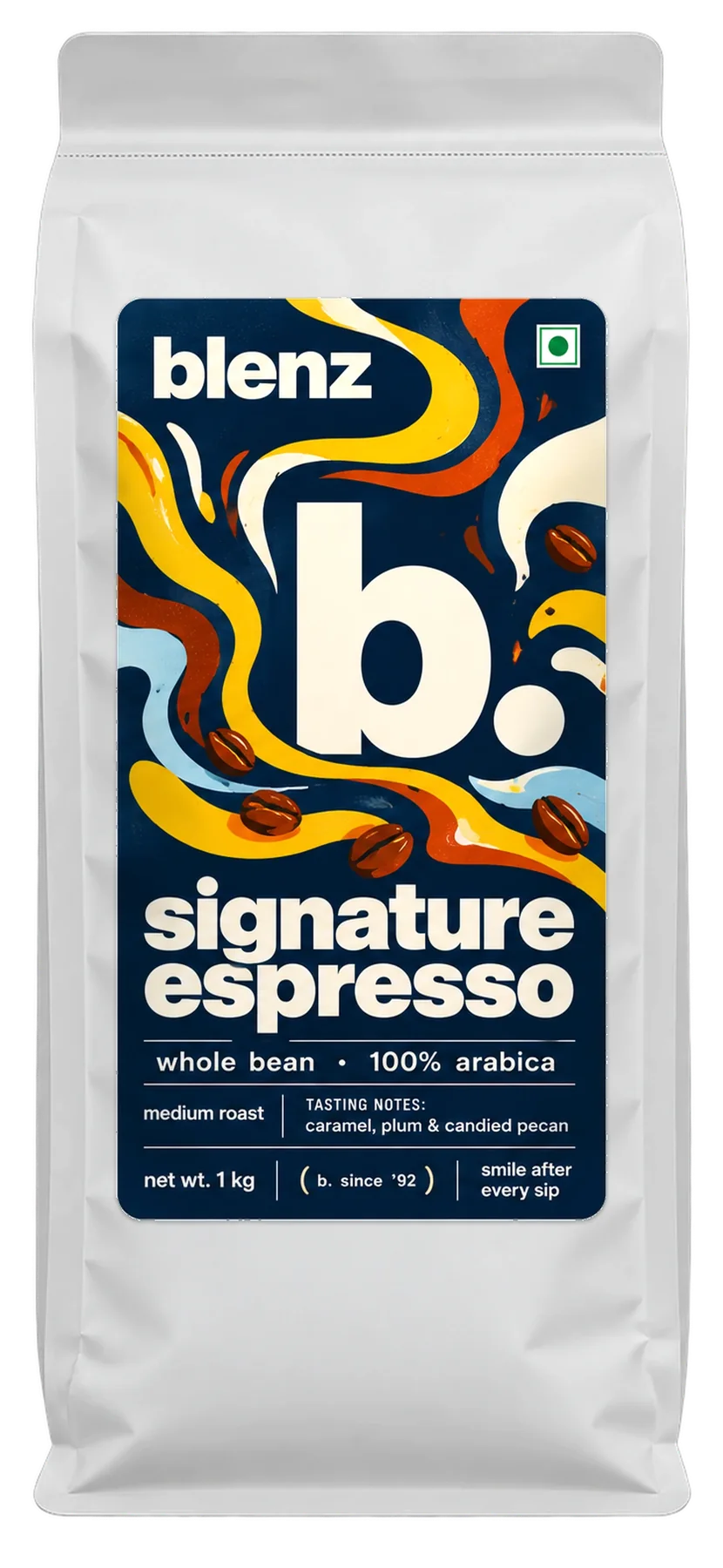
Coffee bag labels
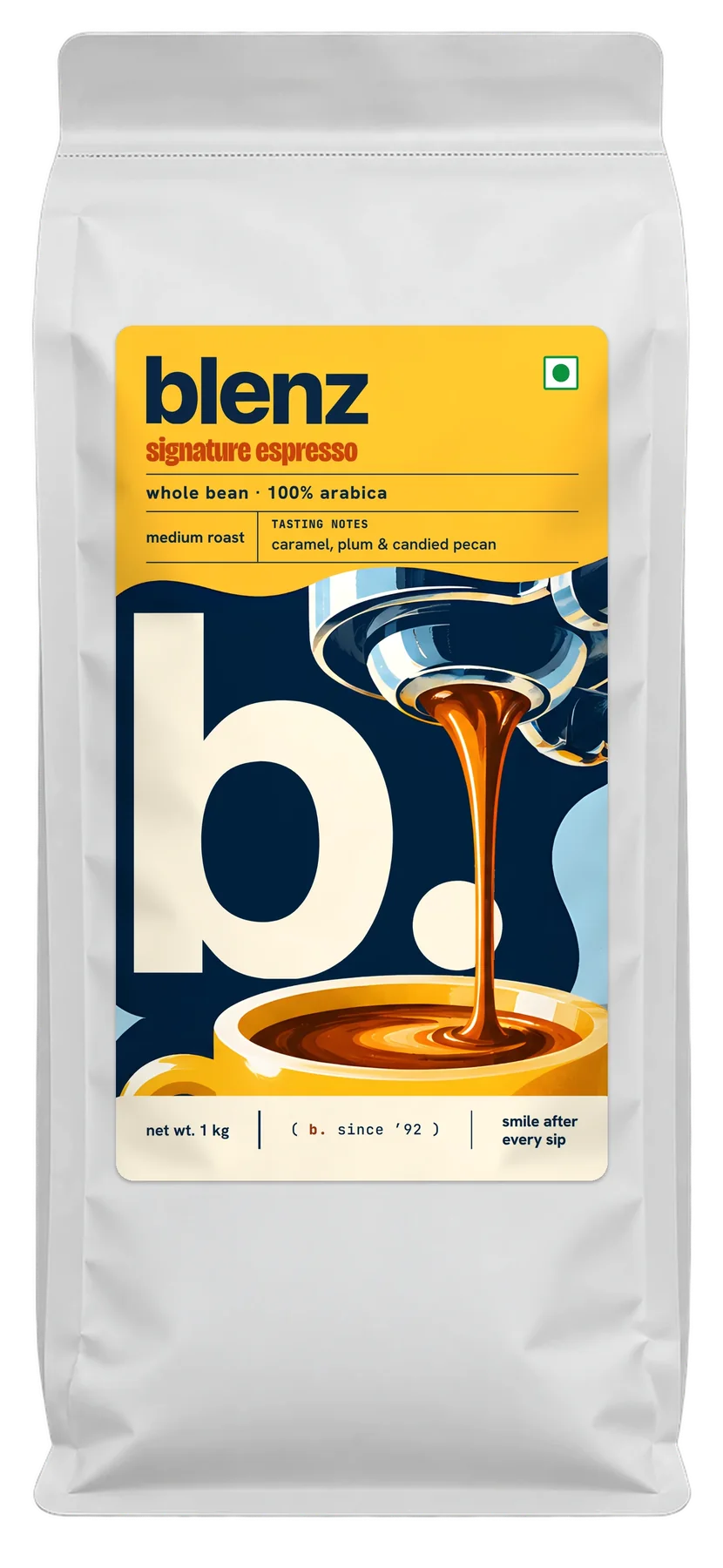
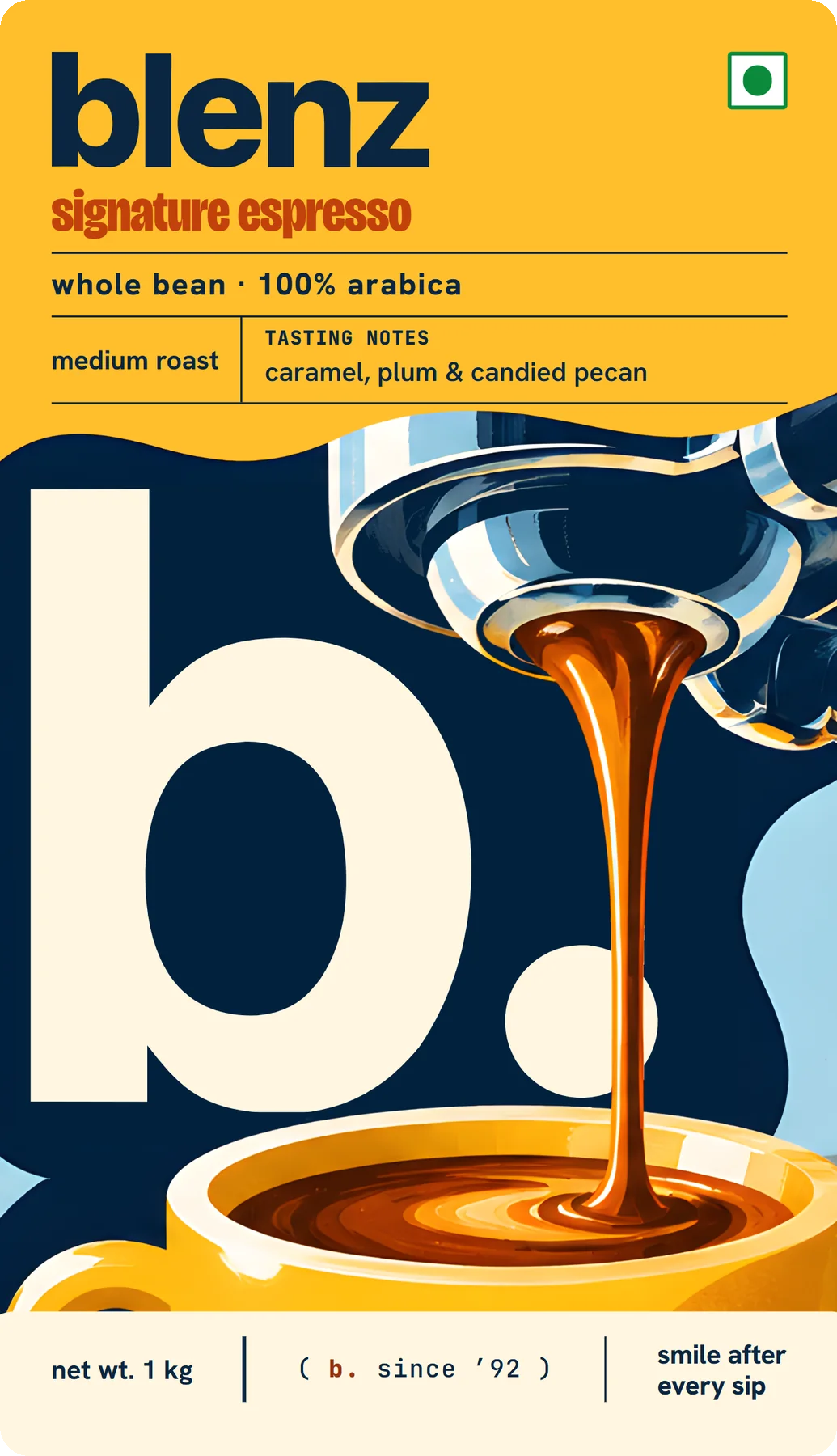
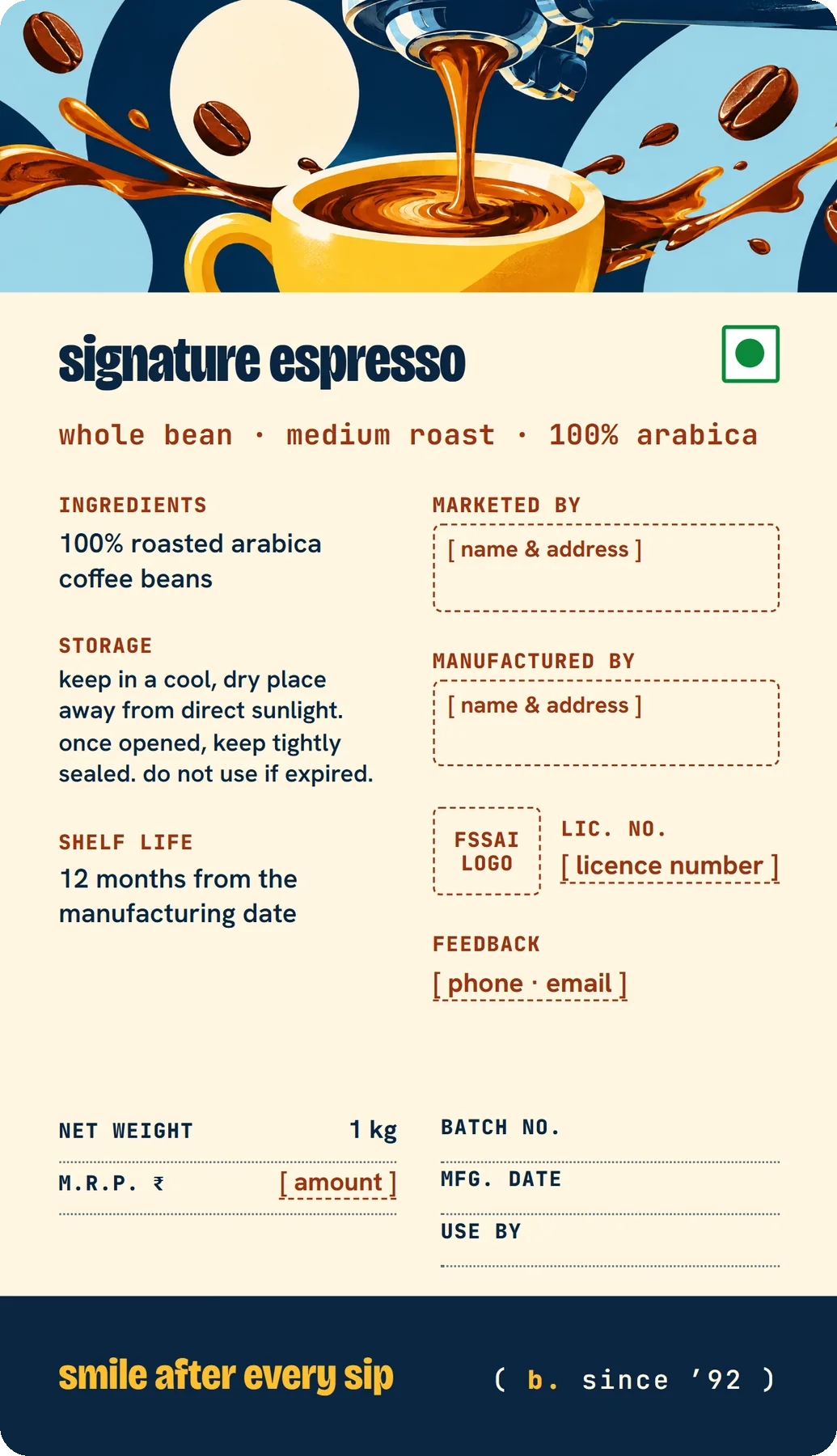
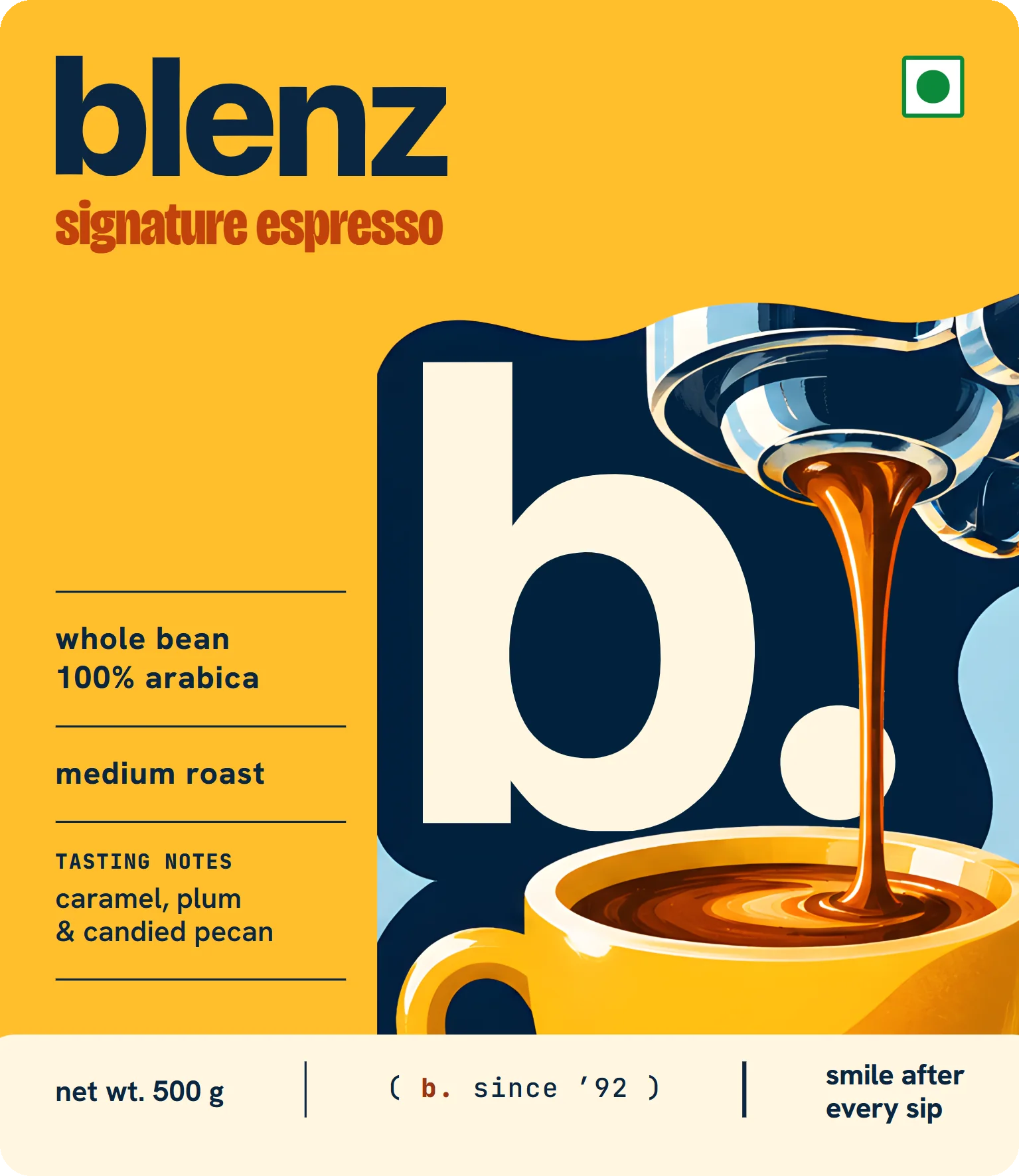
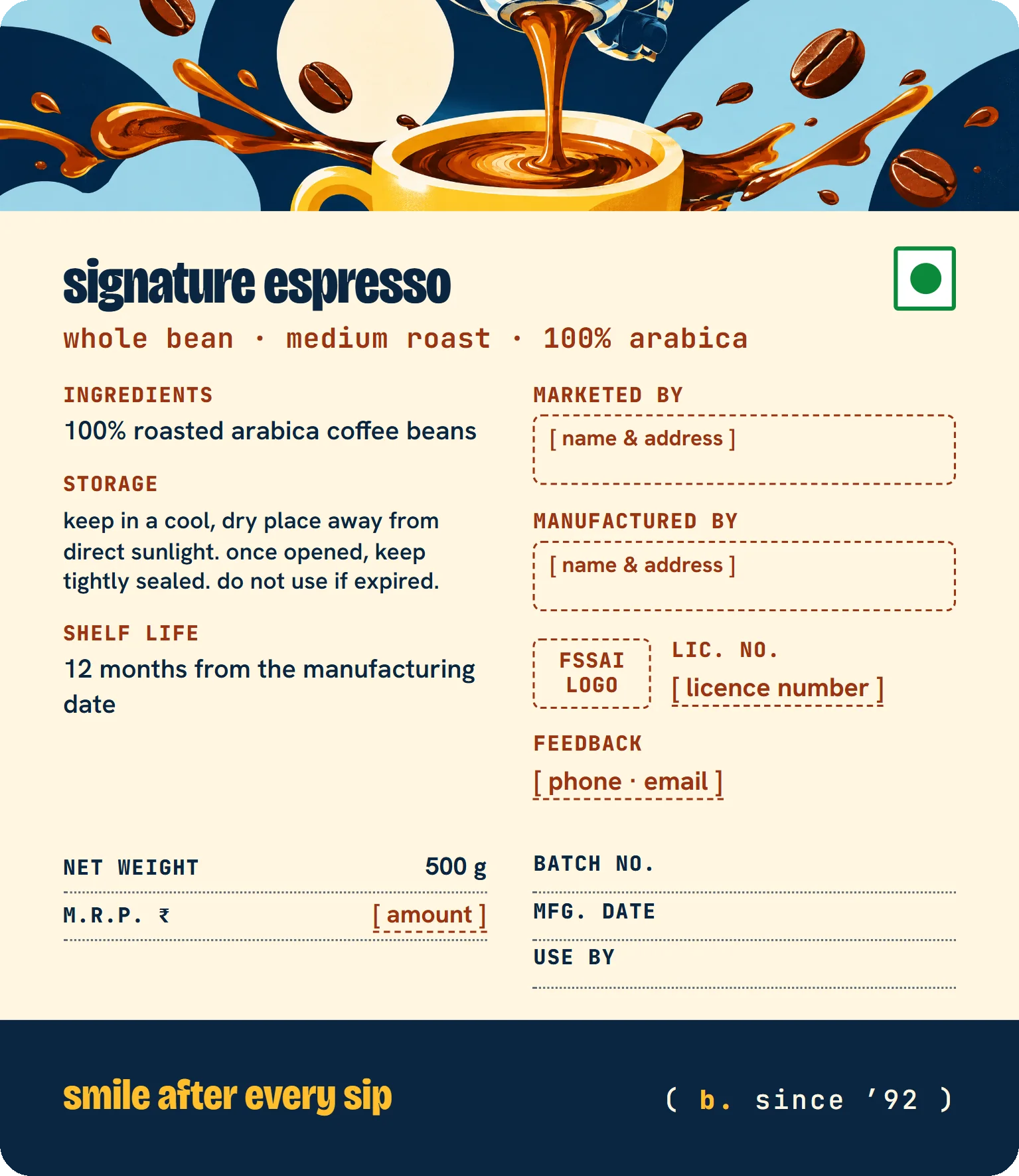
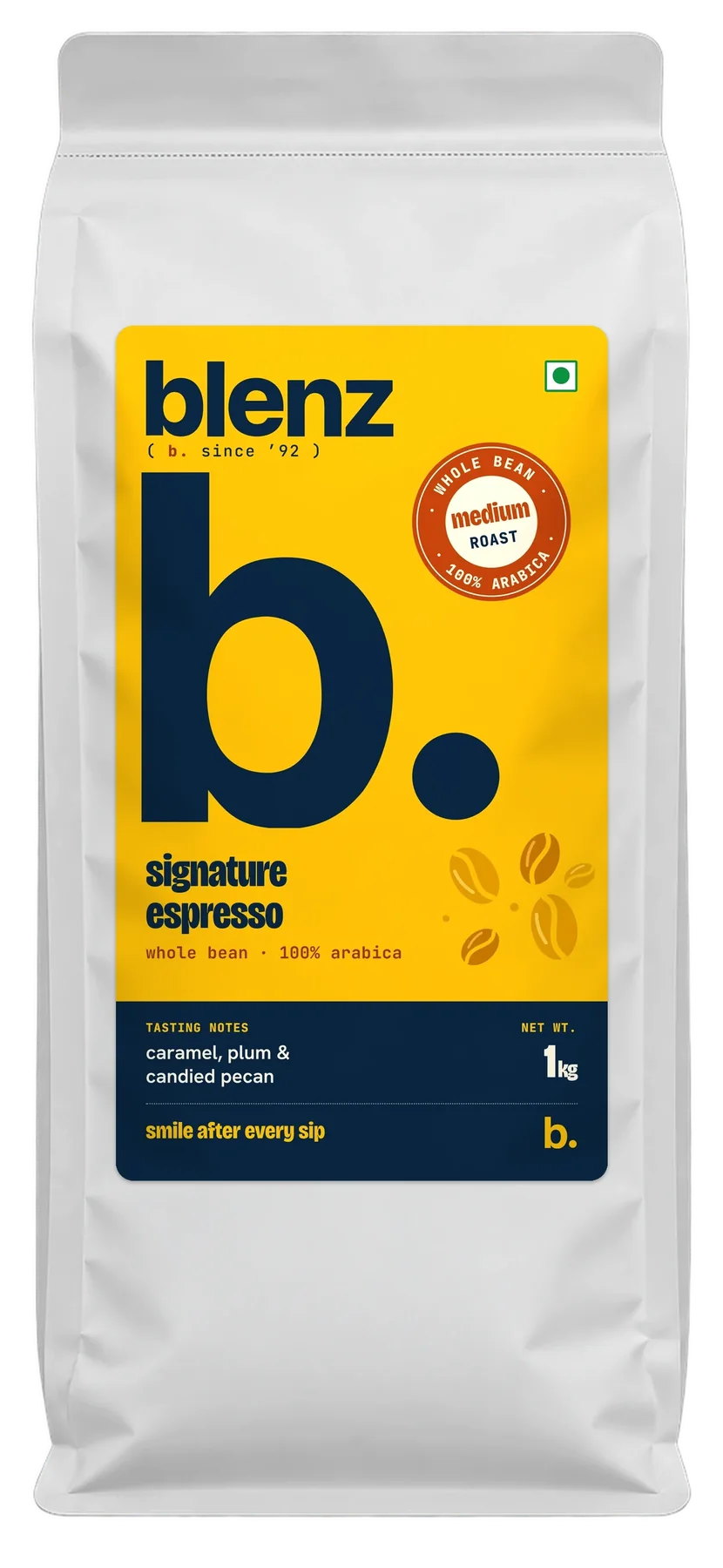
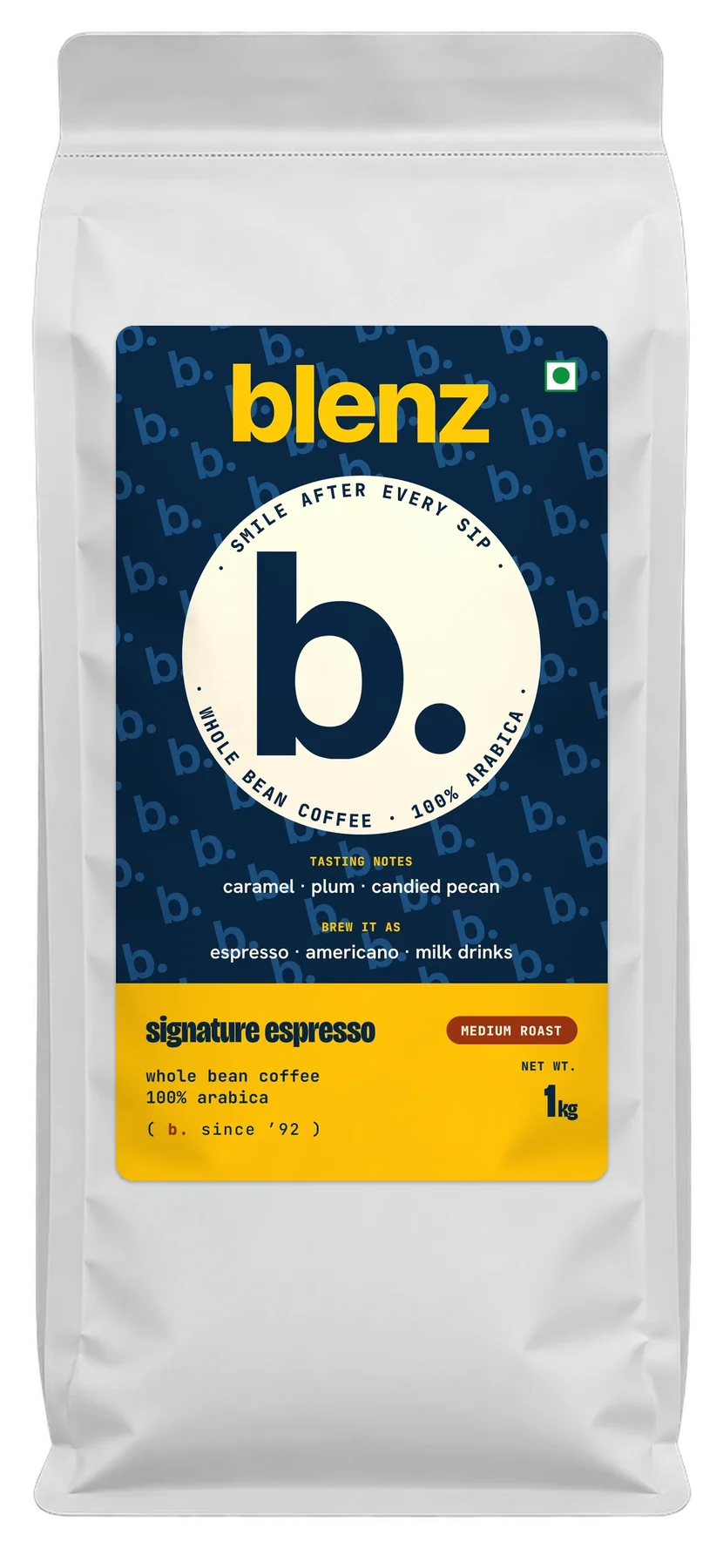
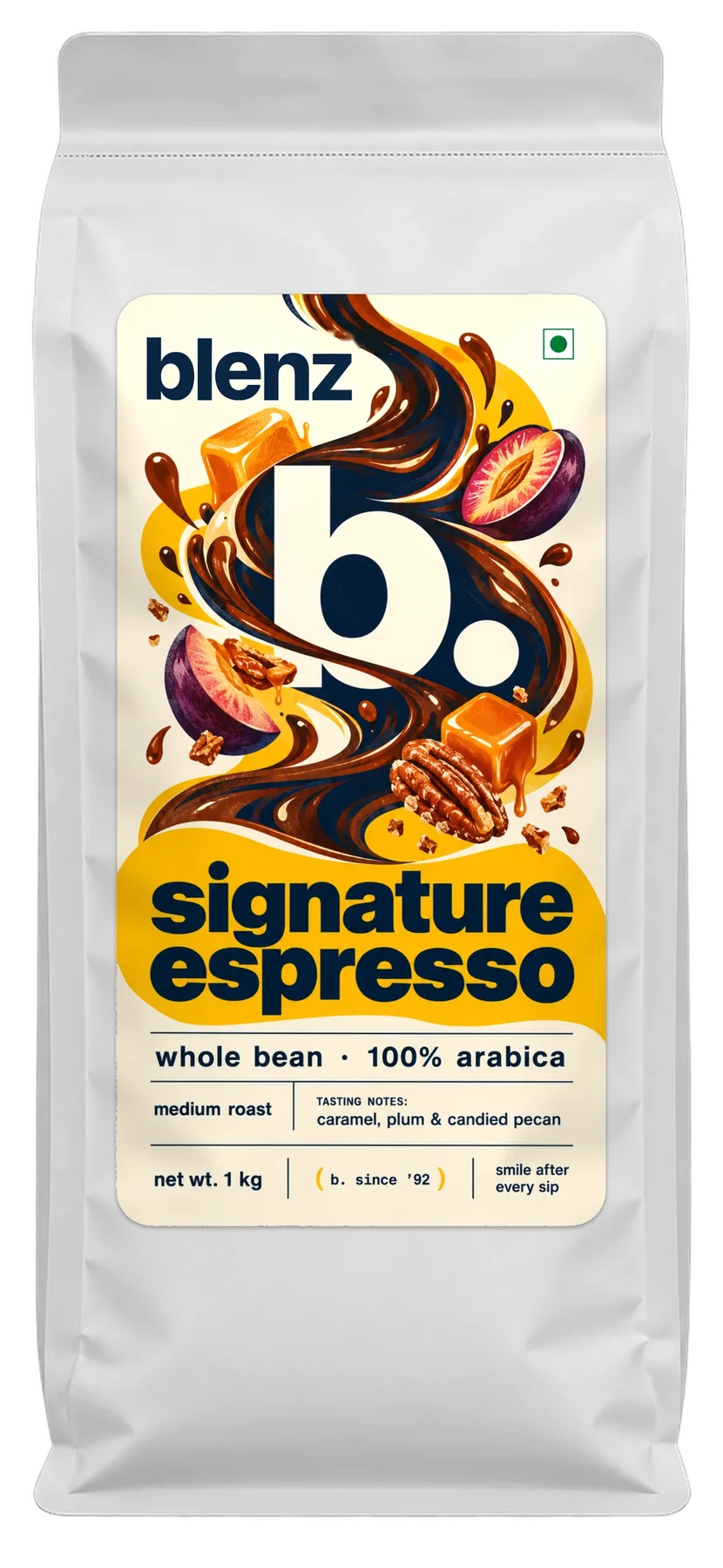
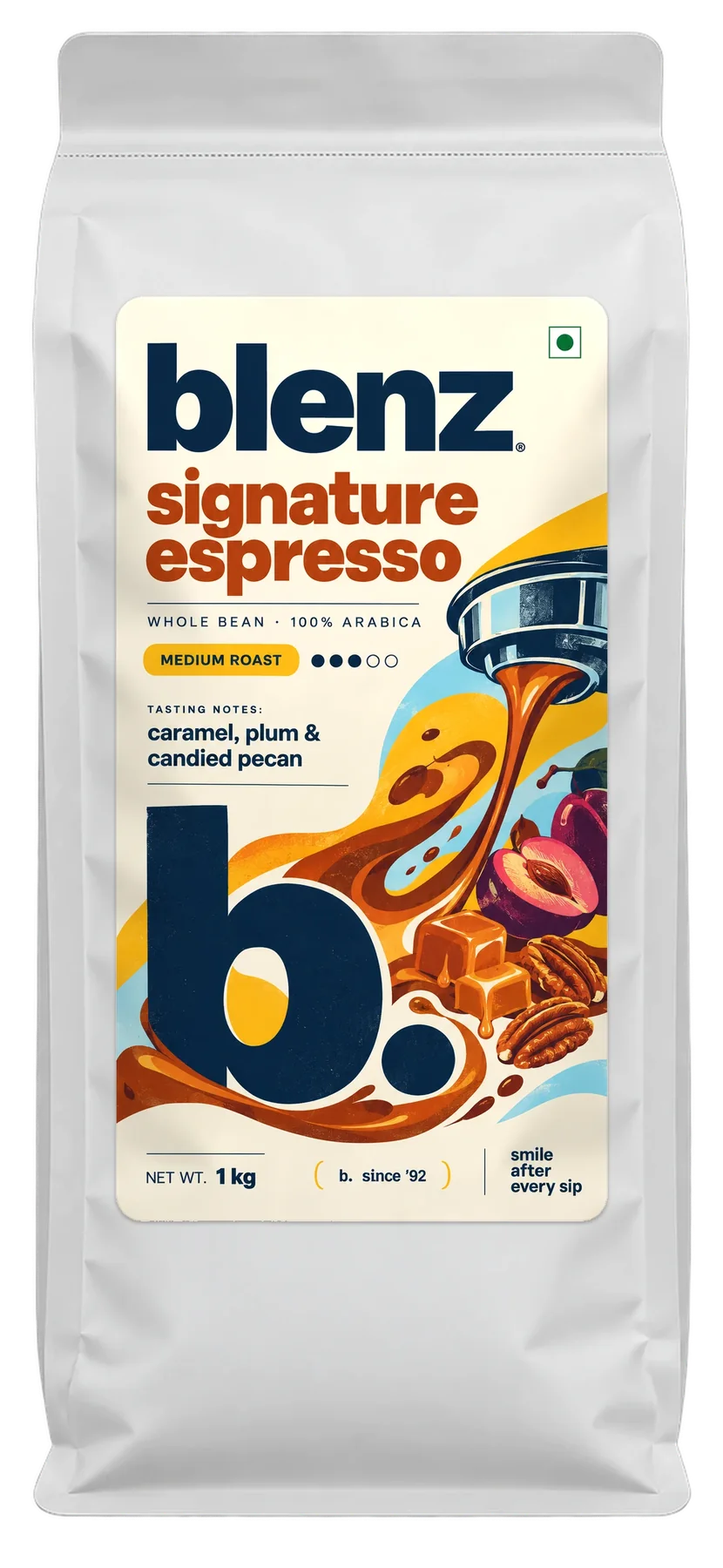
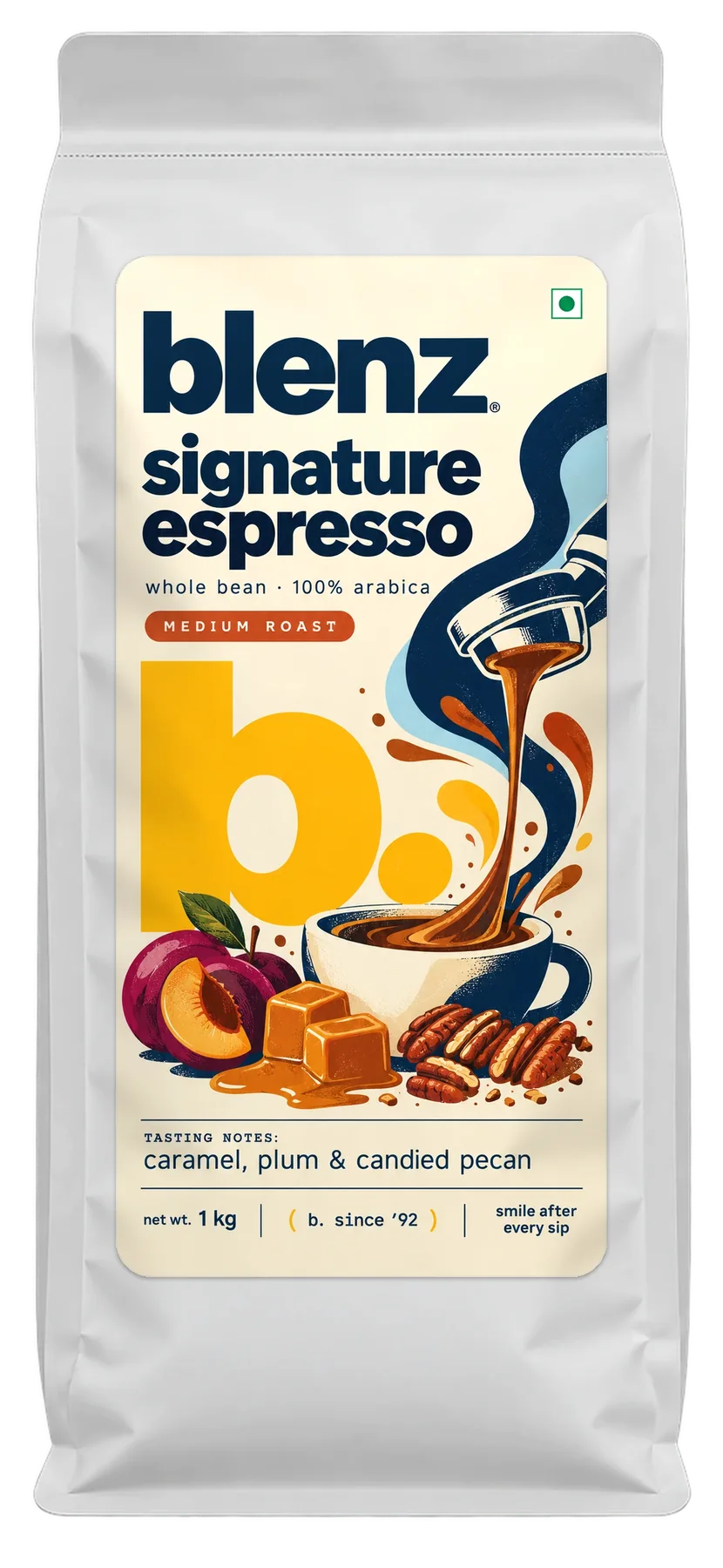
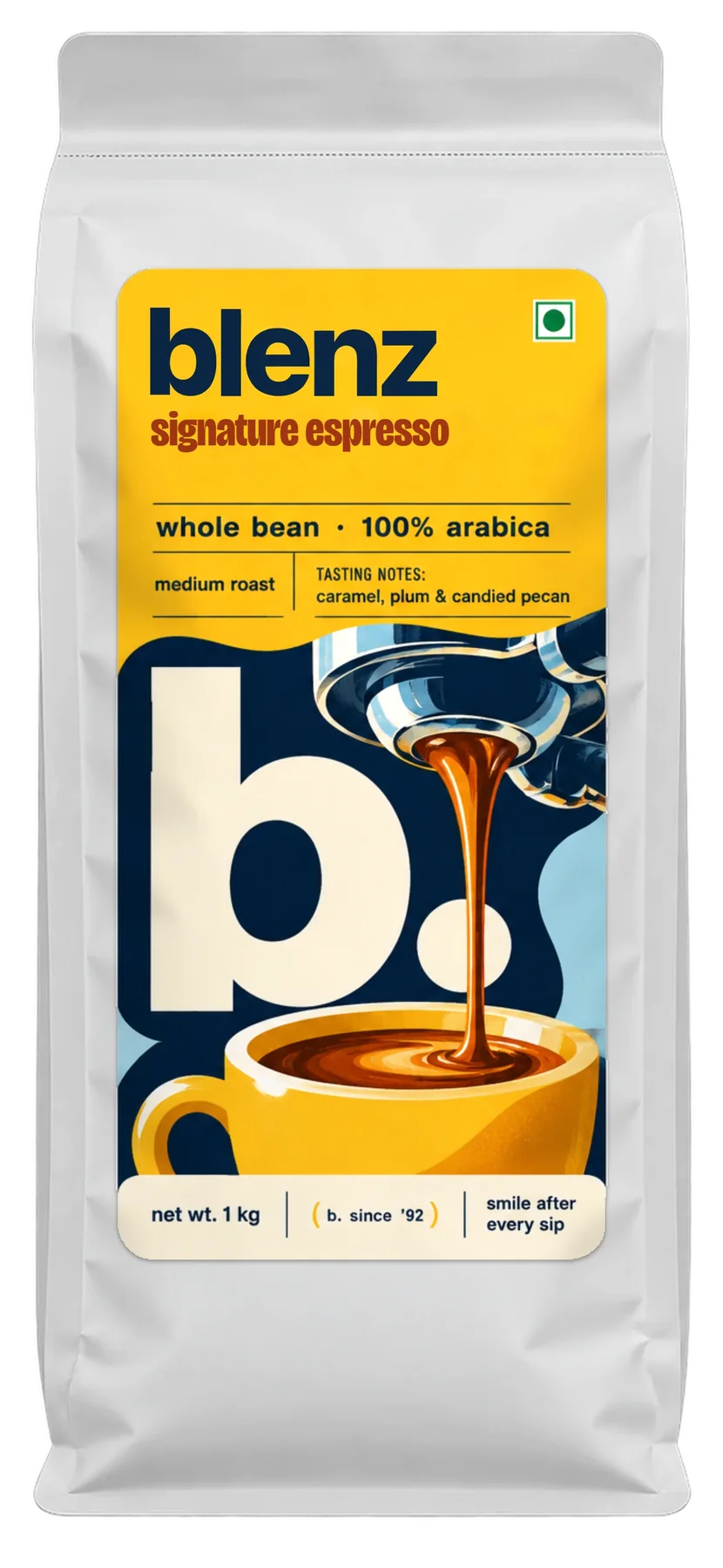
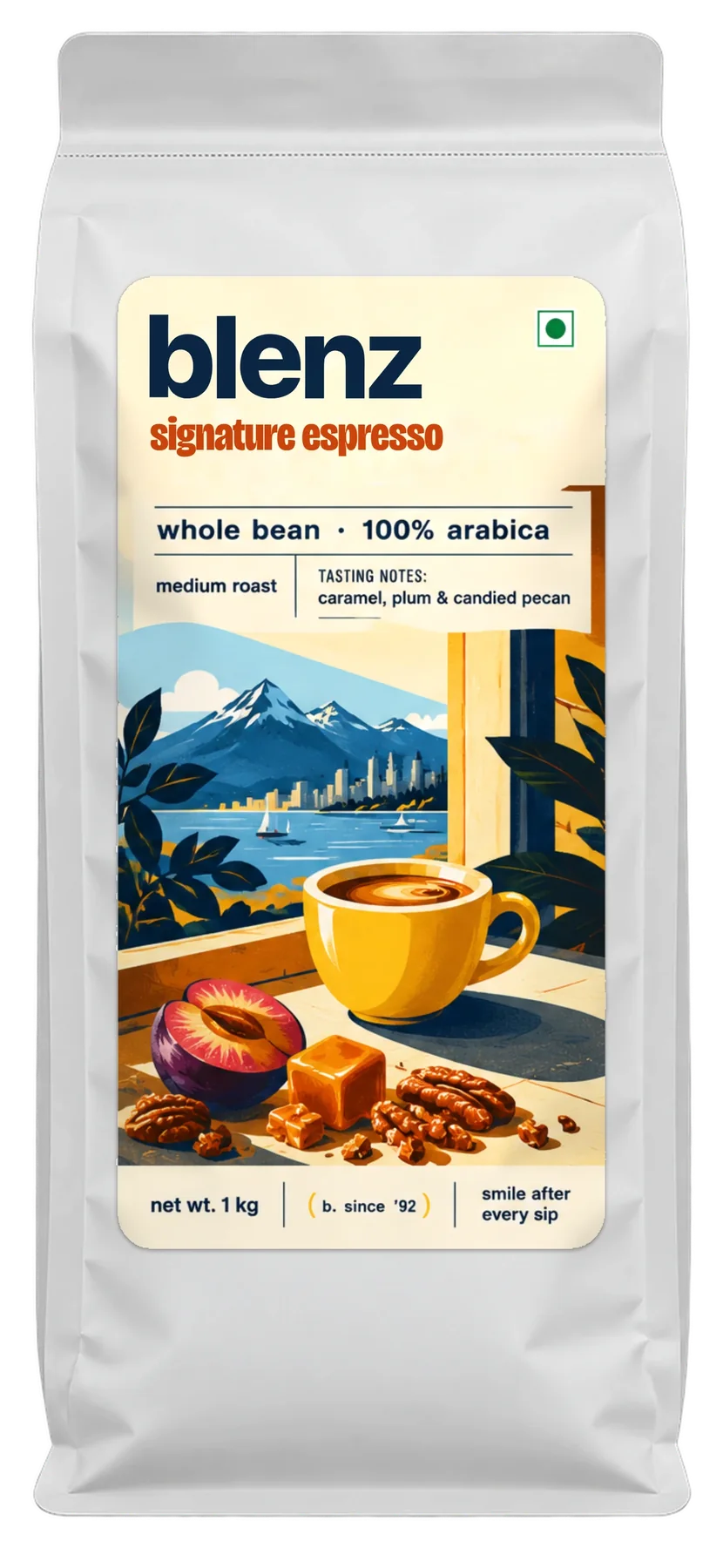
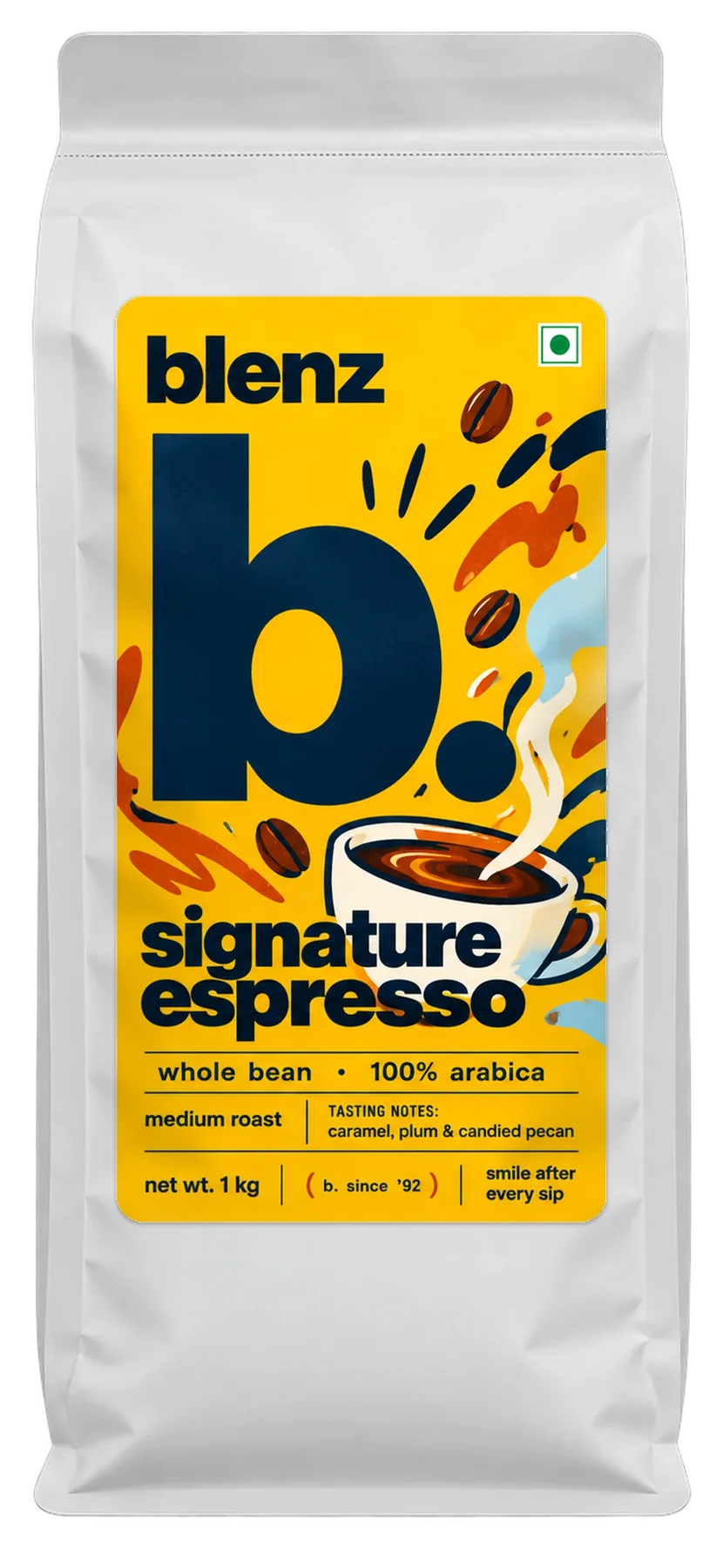
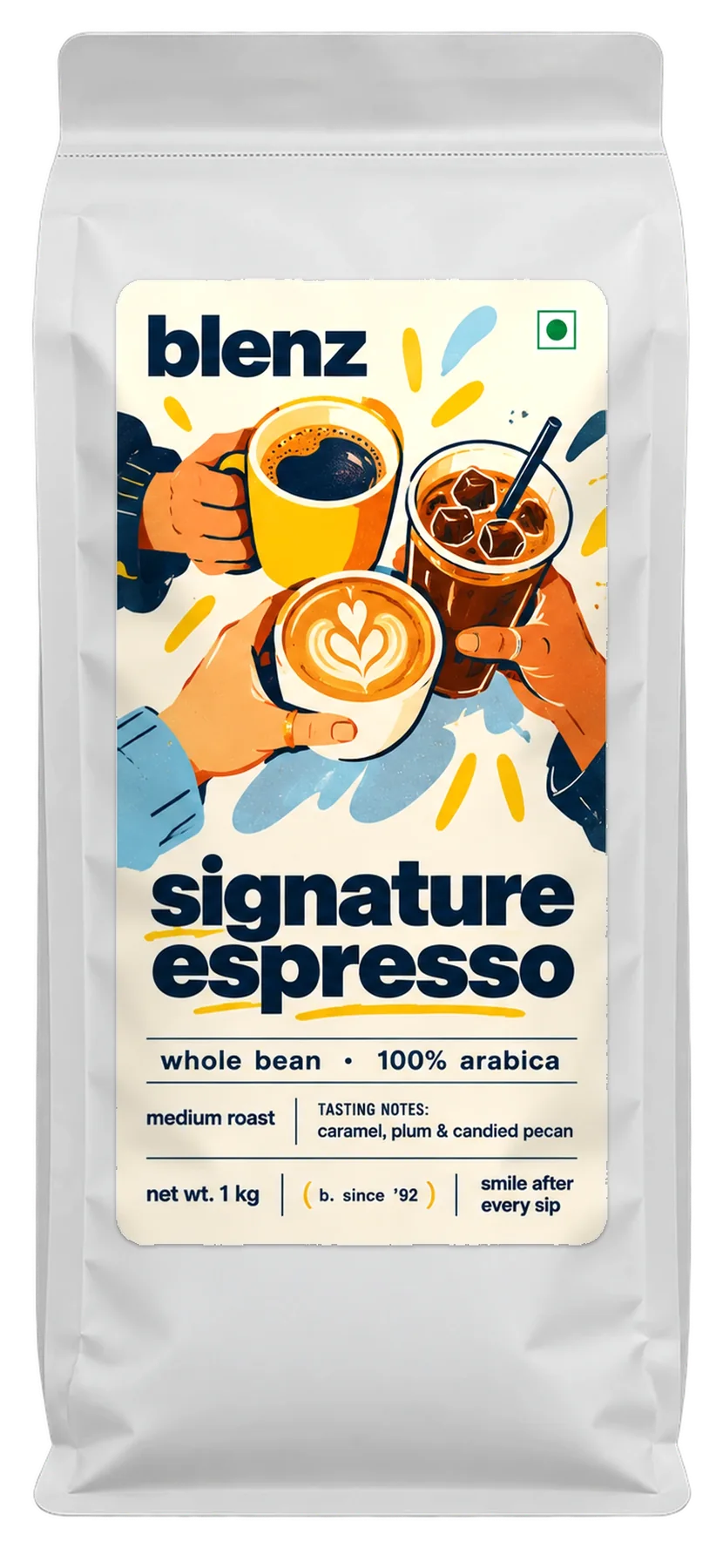
Ten sticker directions were explored before one went on the 1 kg and 500 g bags. Drag, swipe or use the arrows.
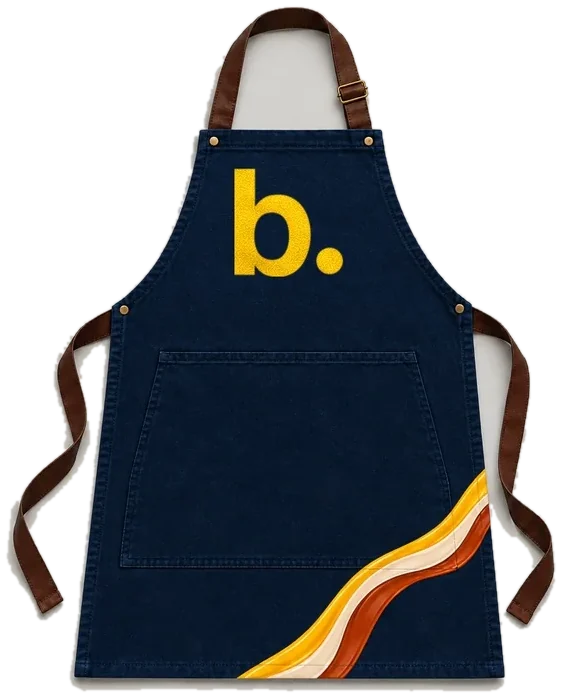
People
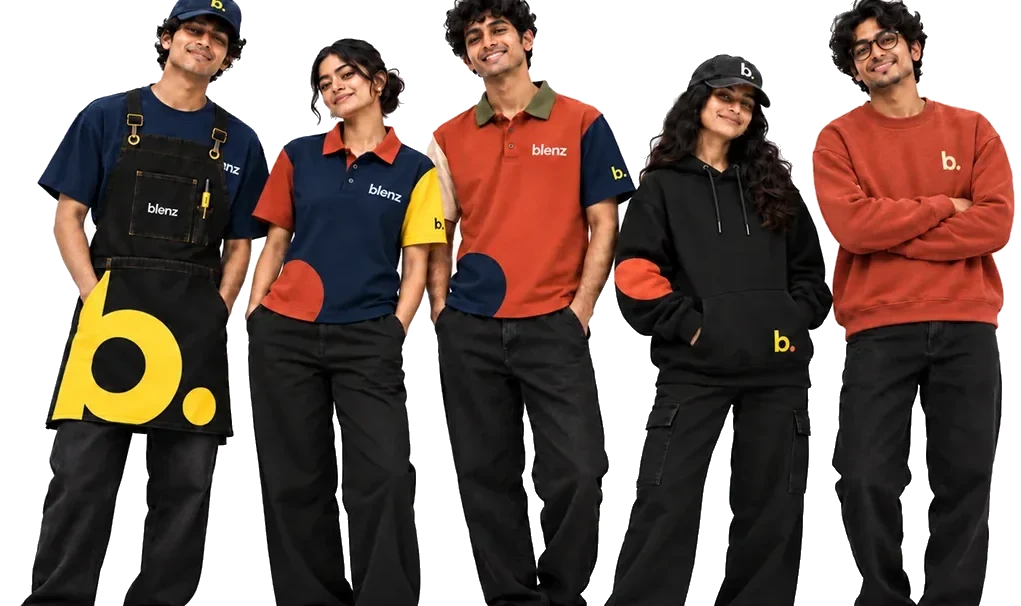
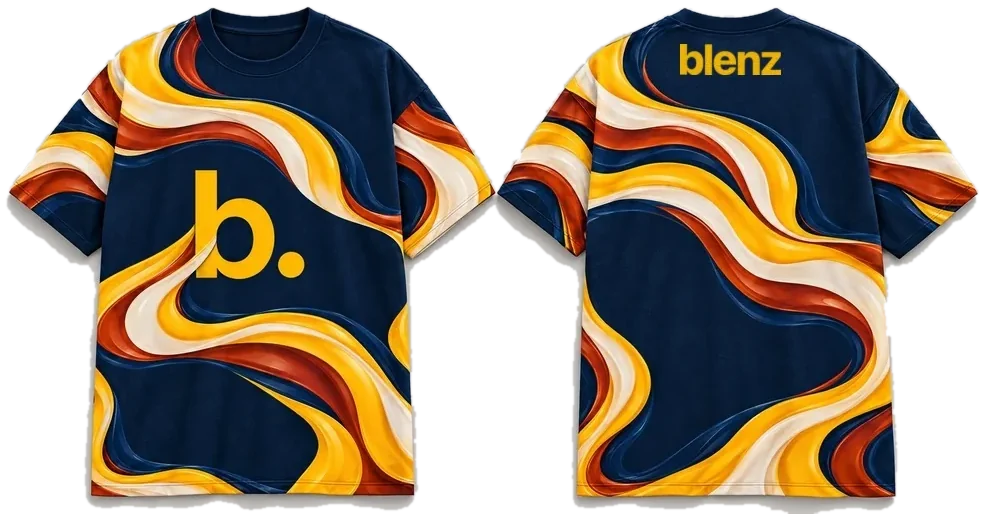
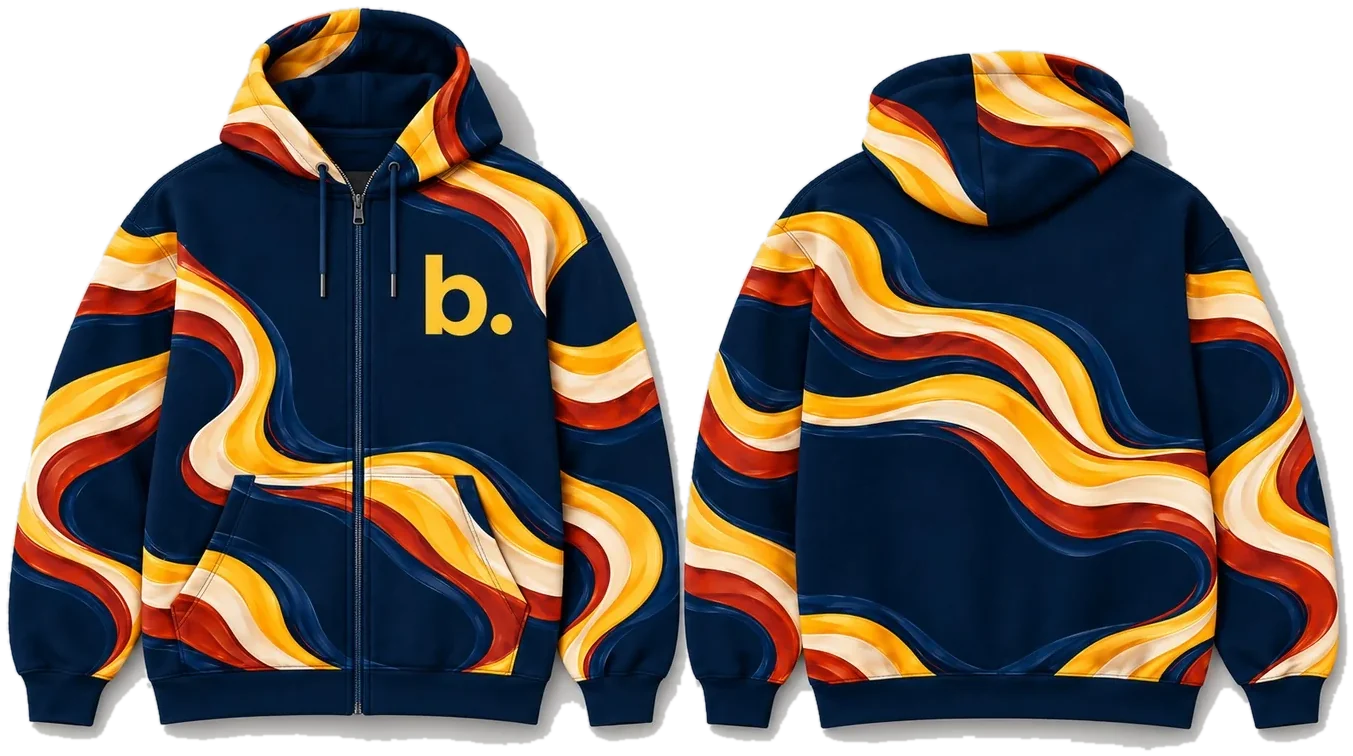
Team uniforms and jerseys in the same design language, so the brand is worn as well as printed.
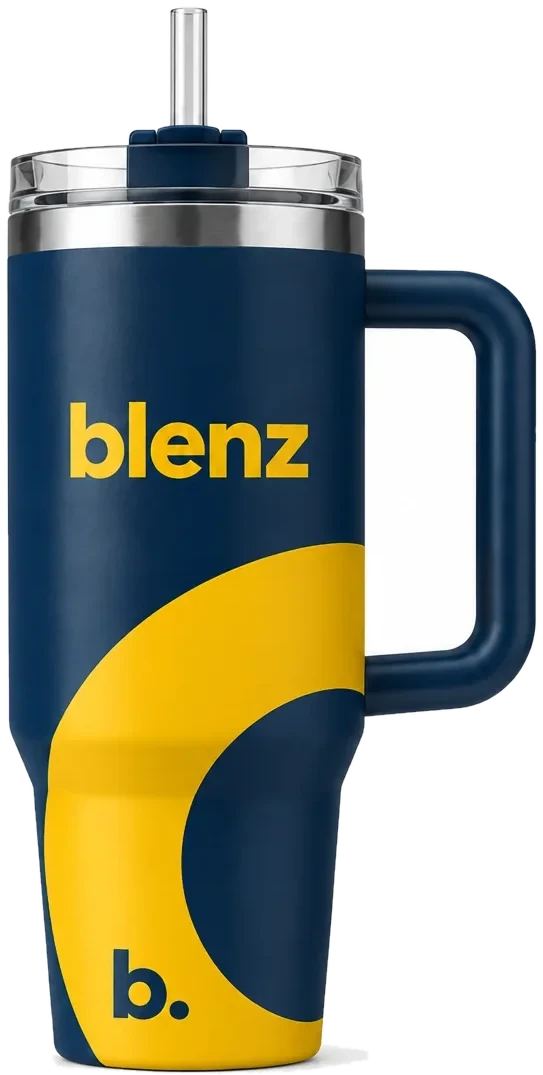
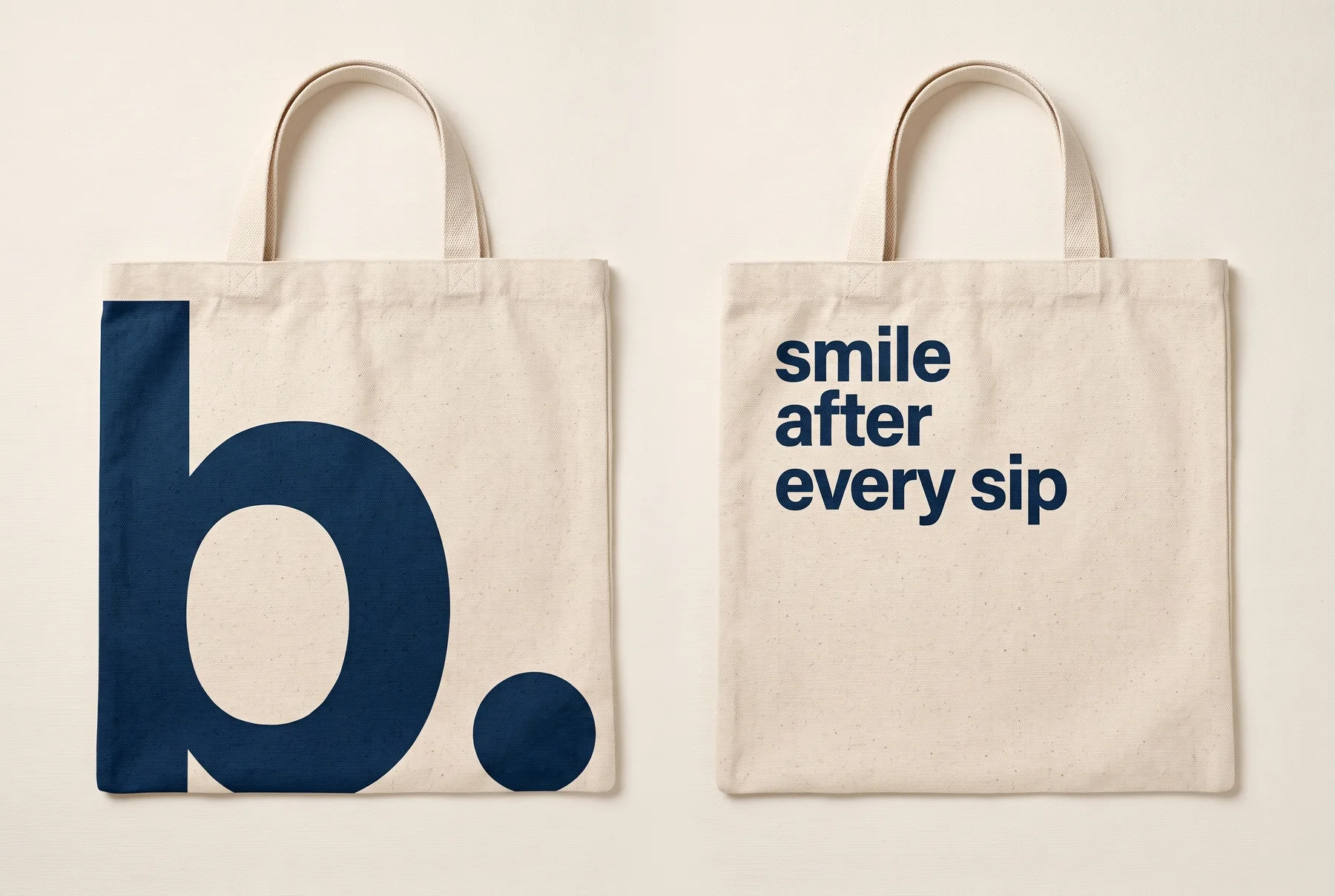
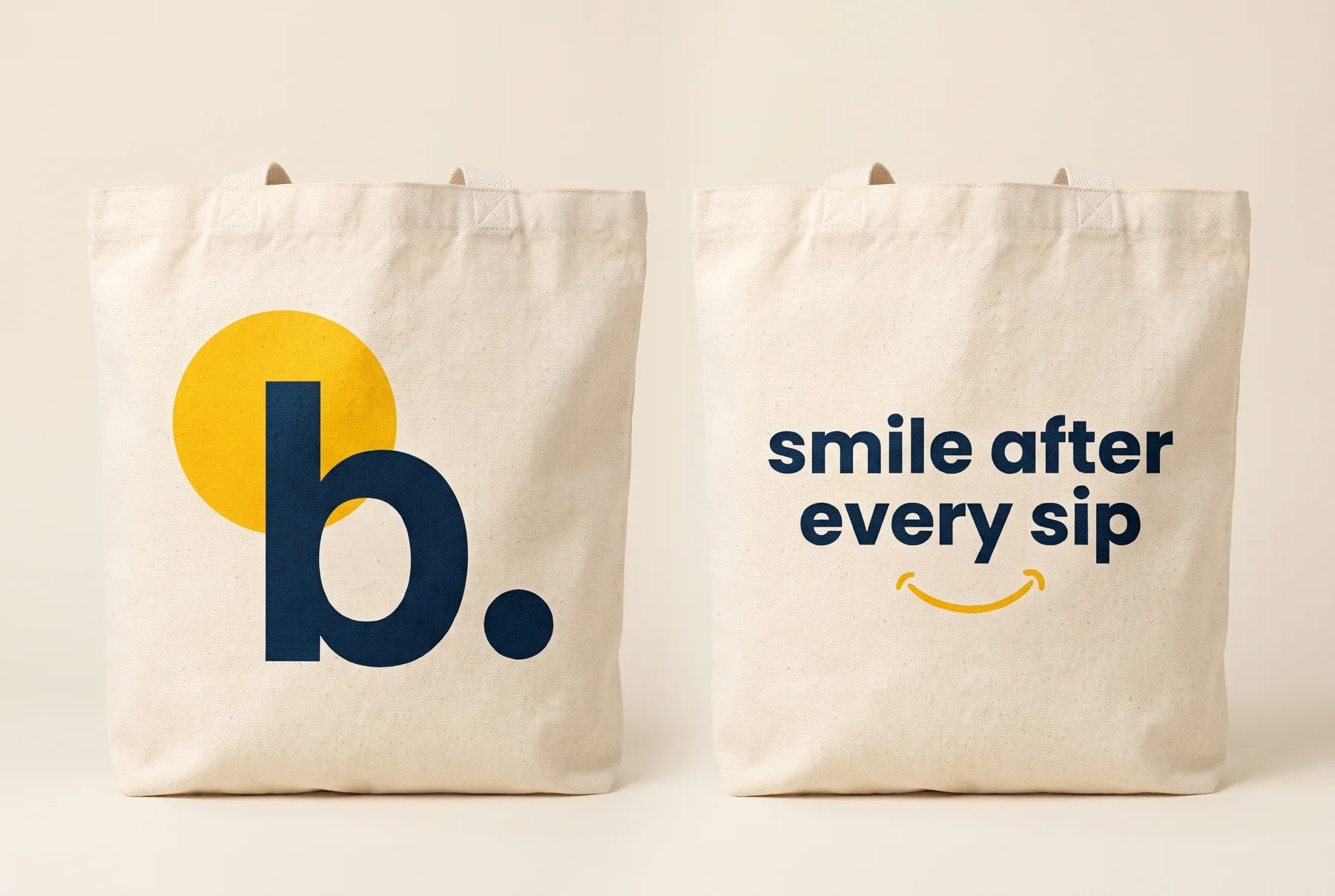
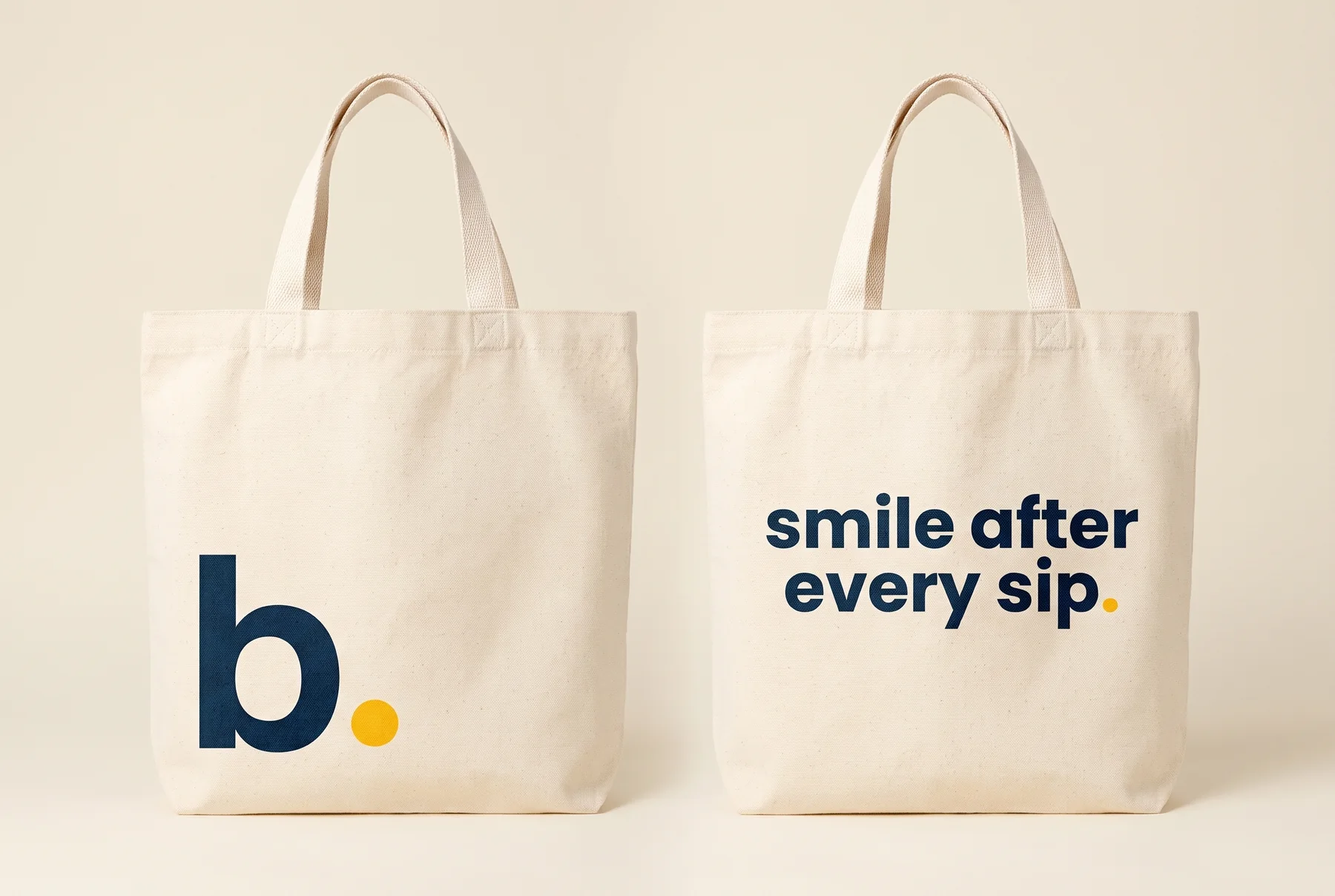
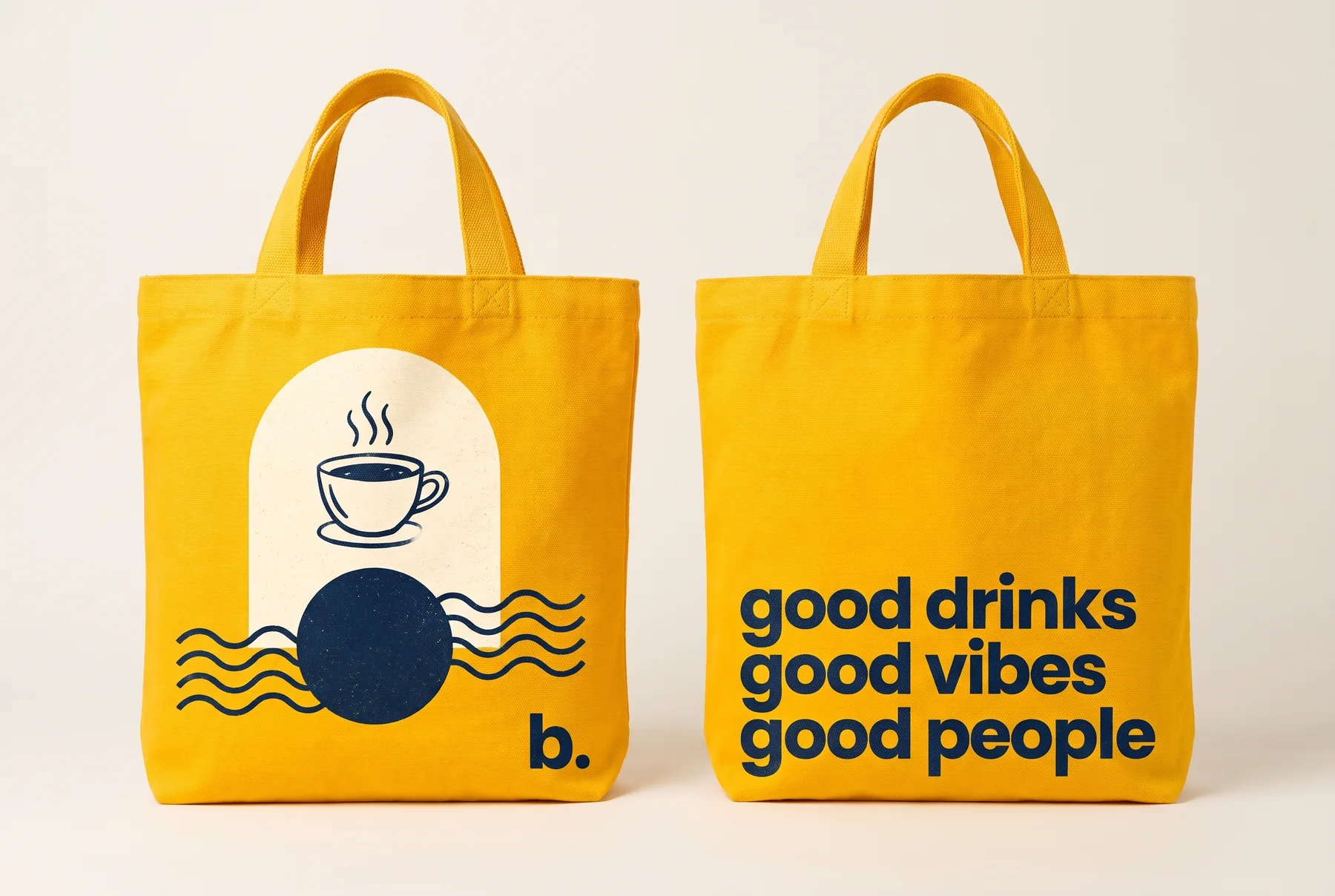
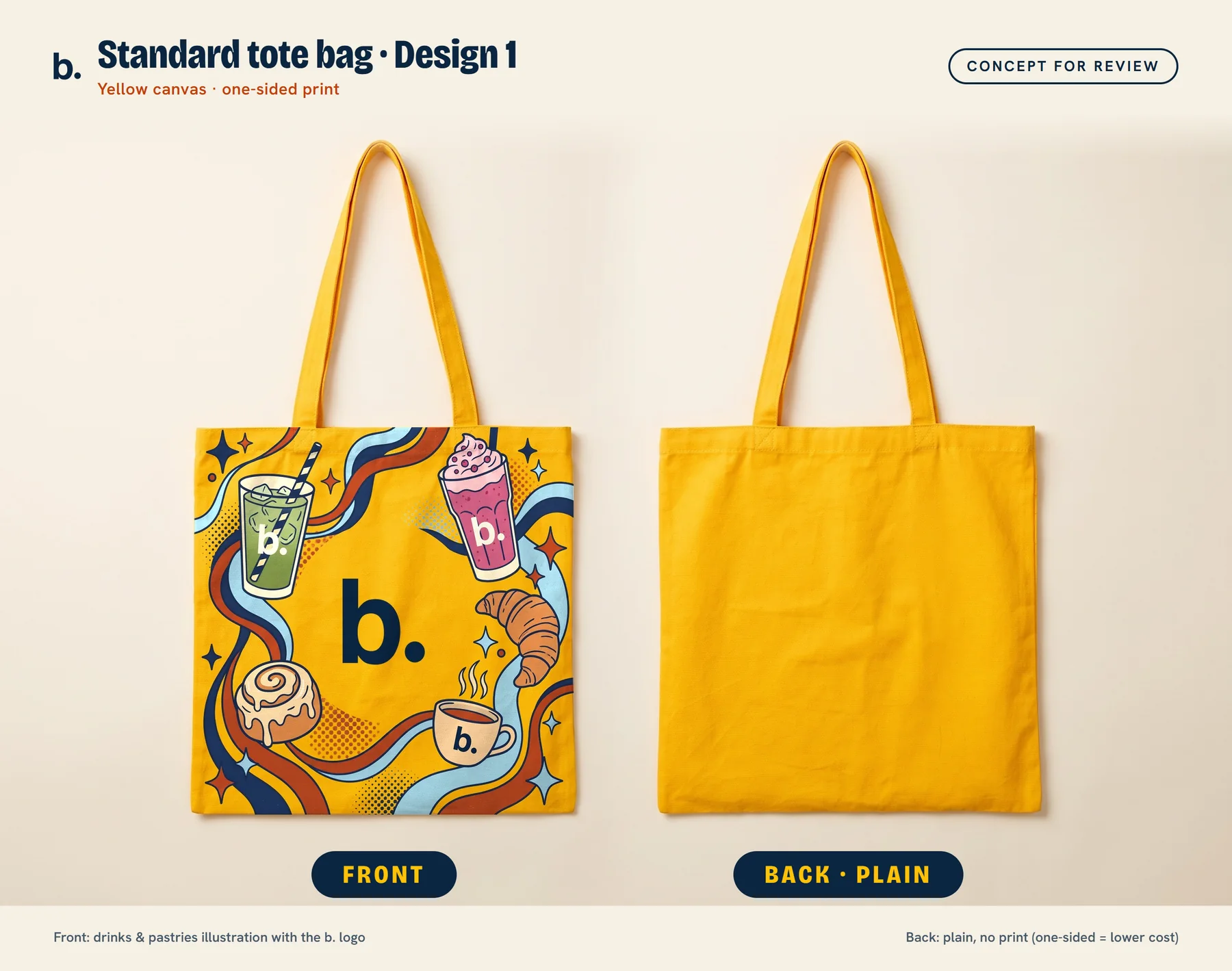
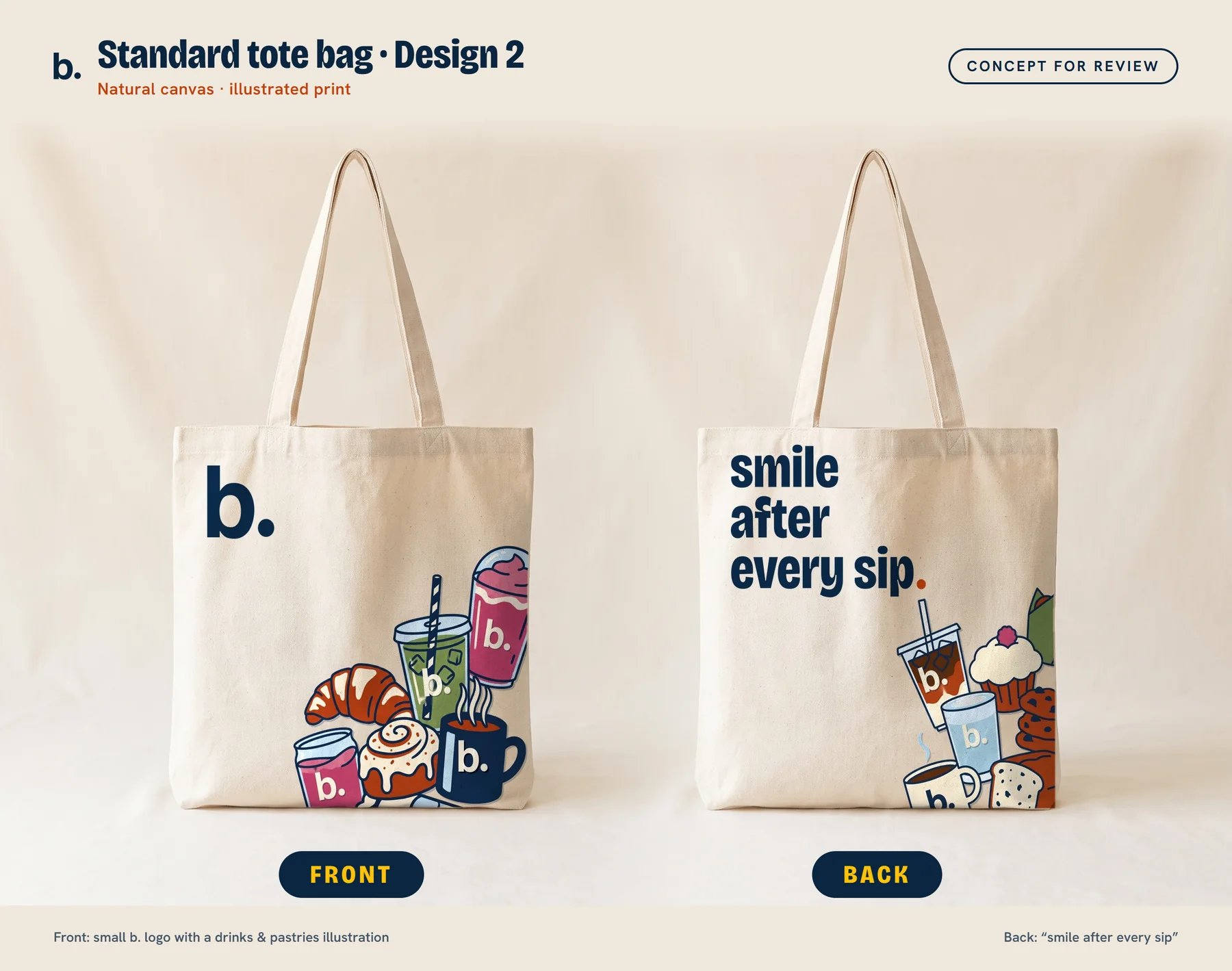
Merch
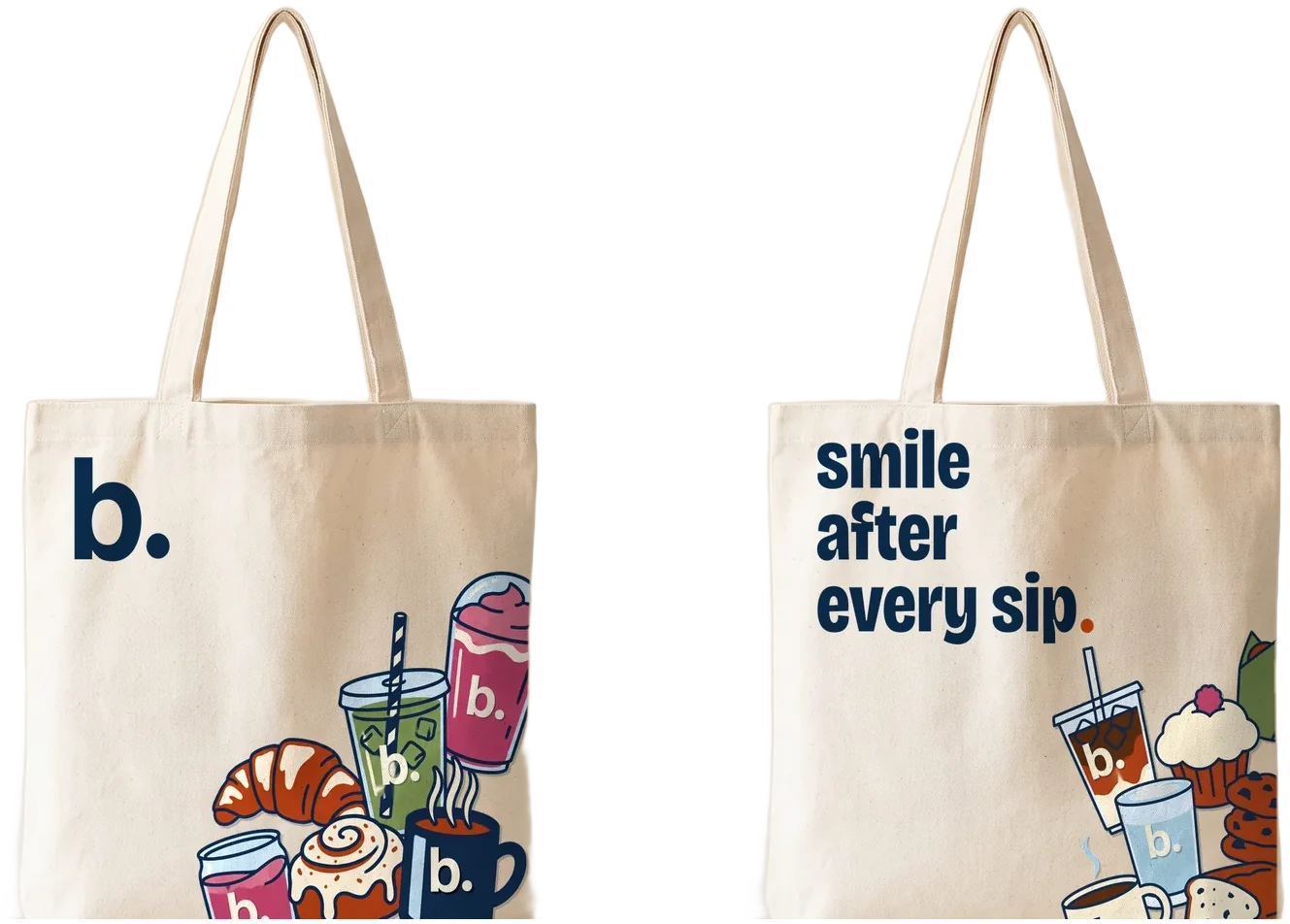
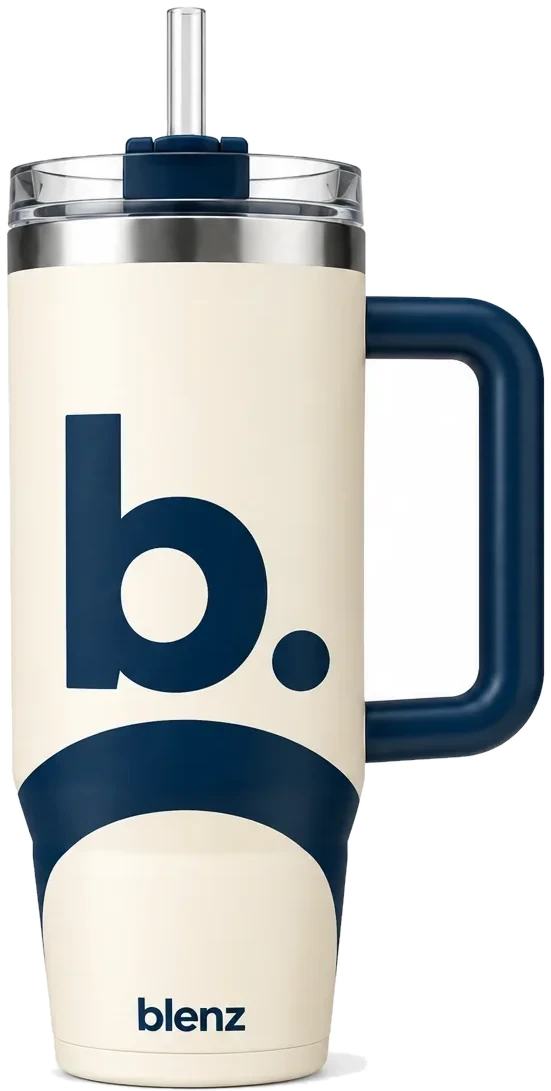
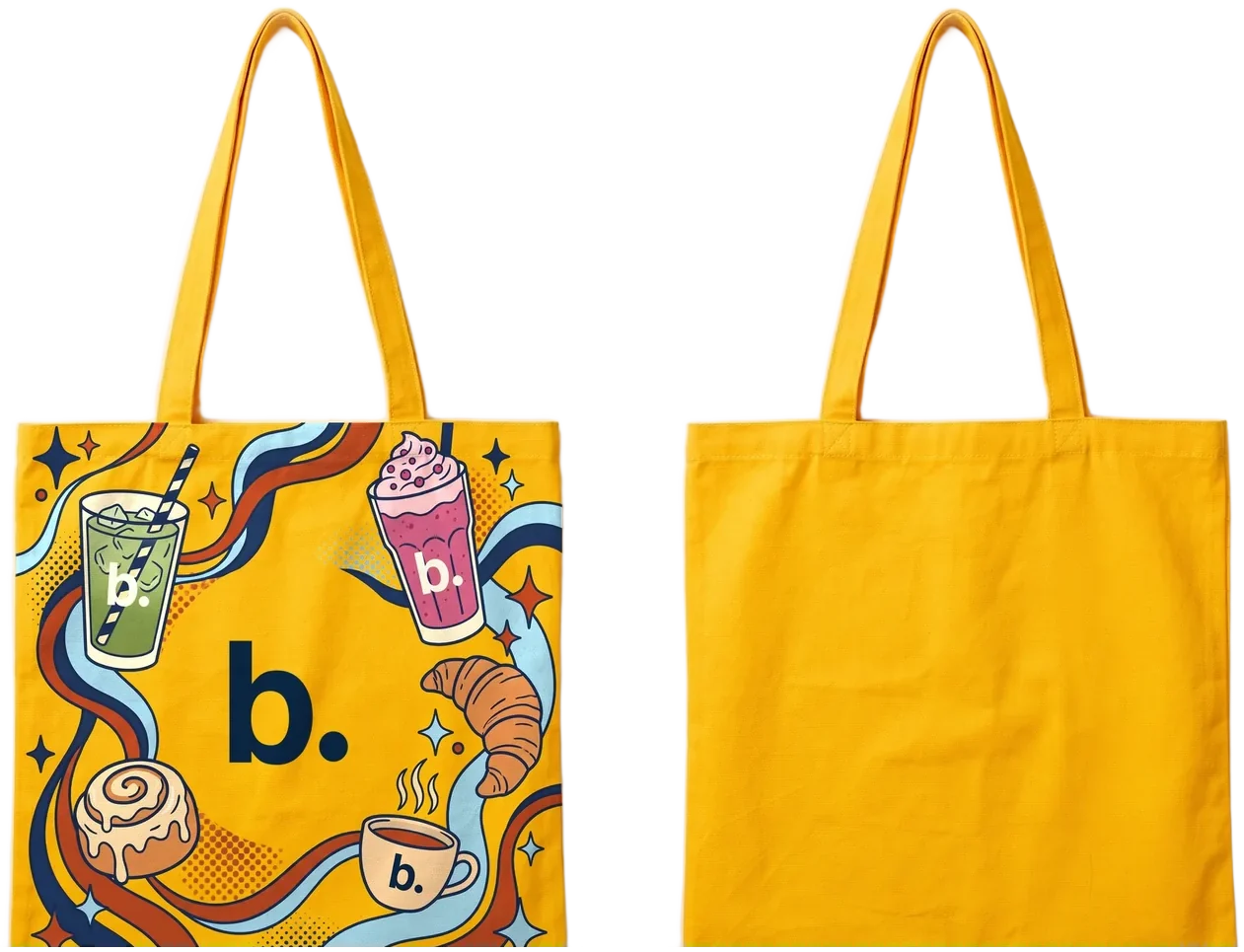
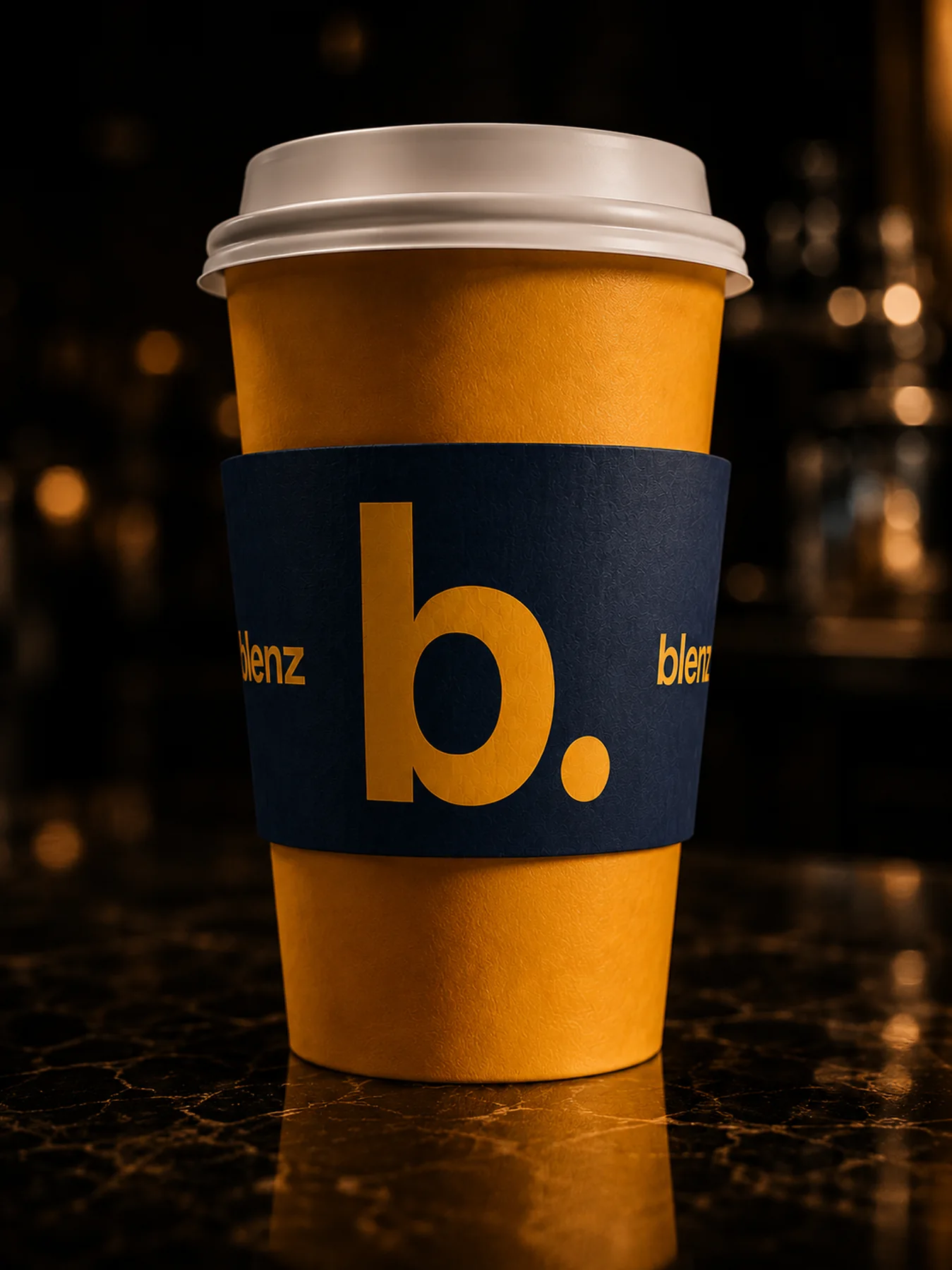
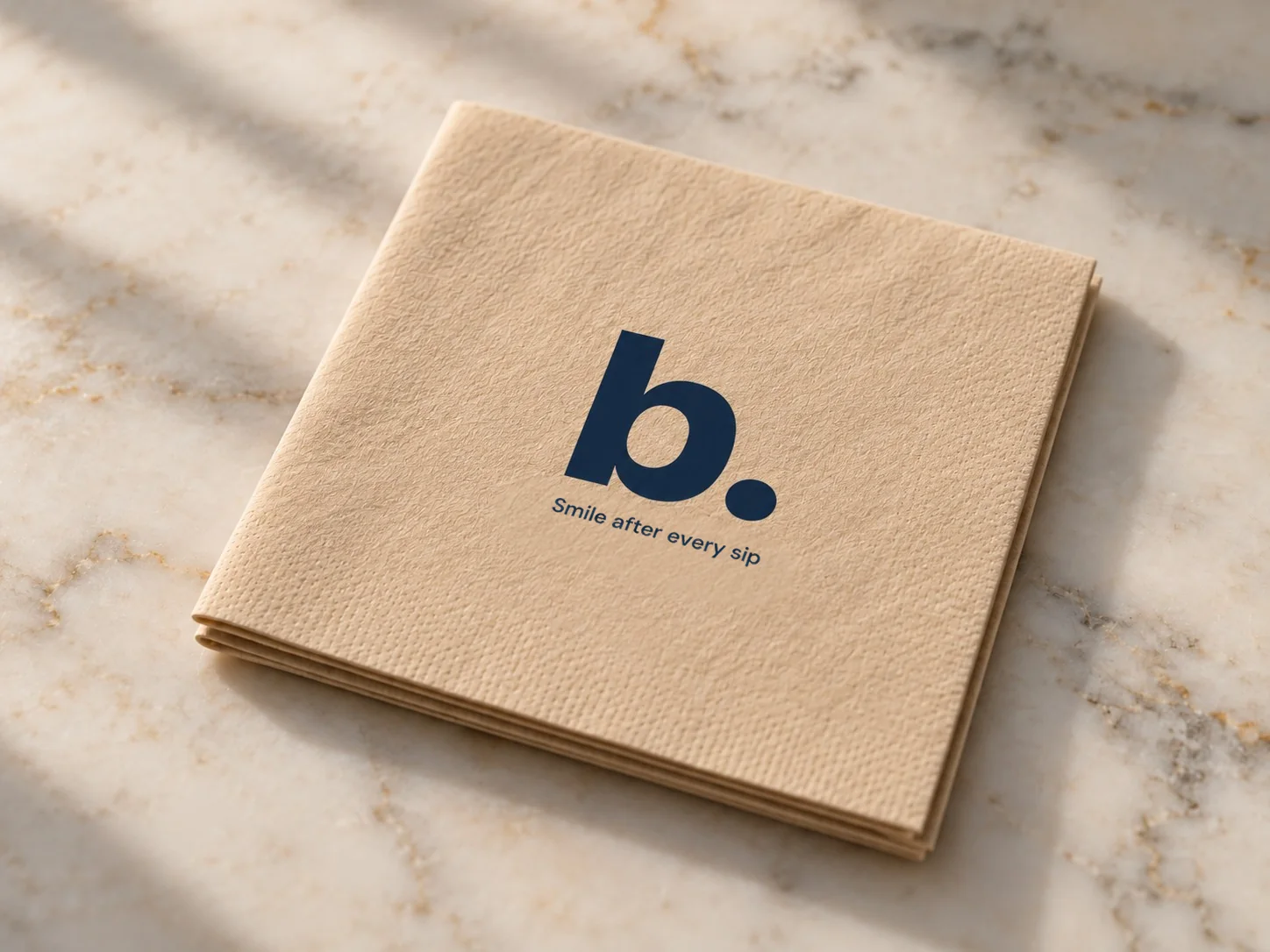
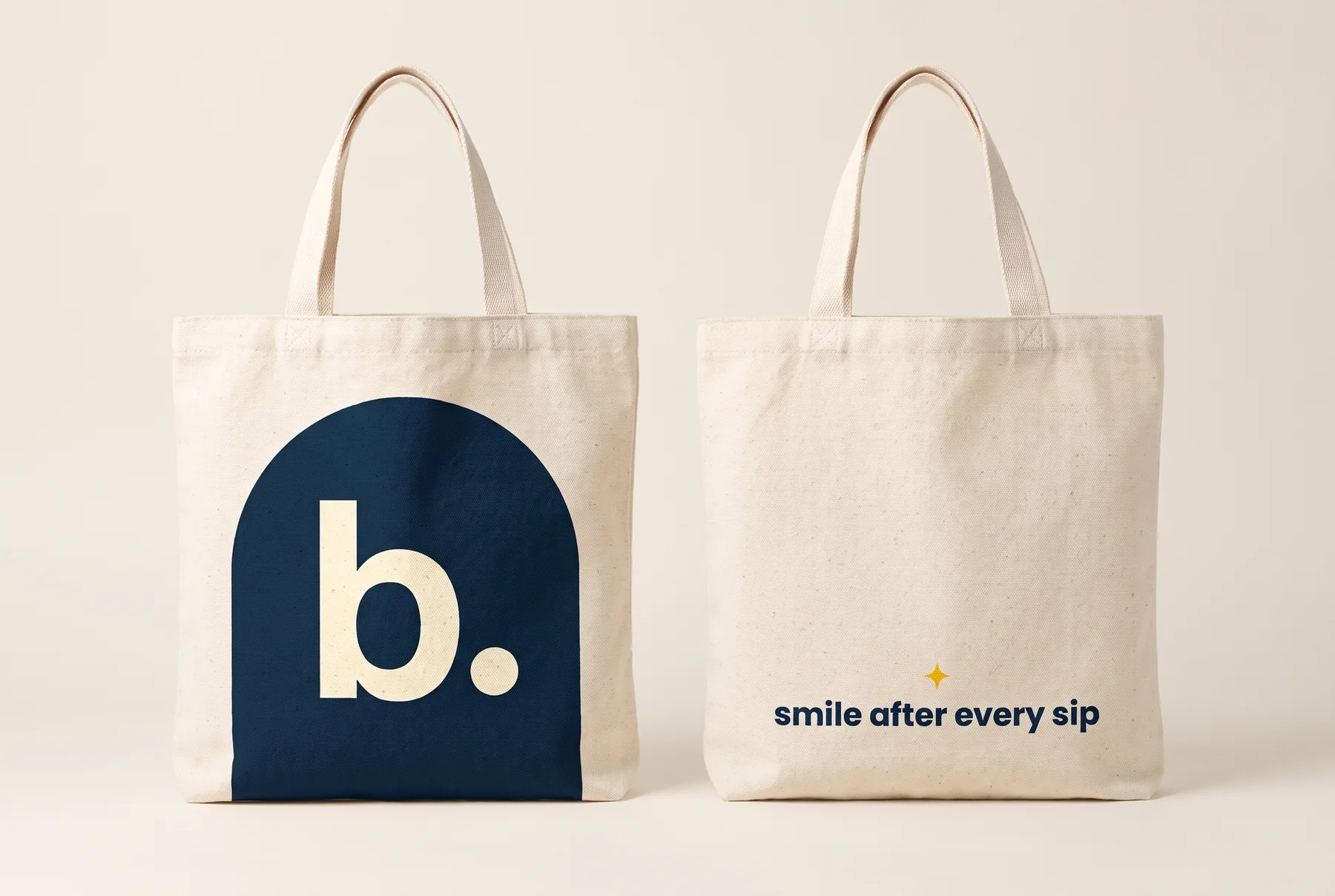
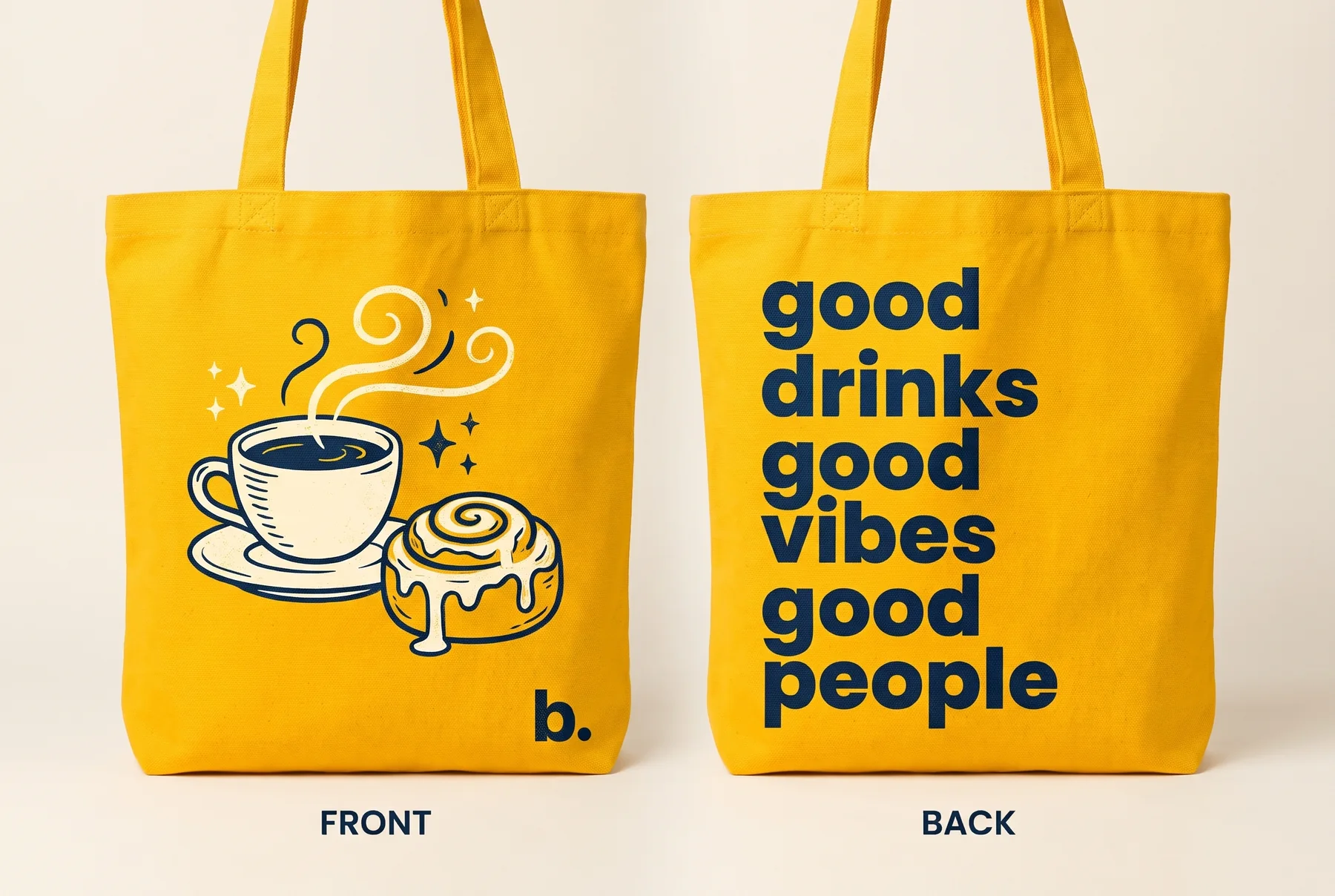
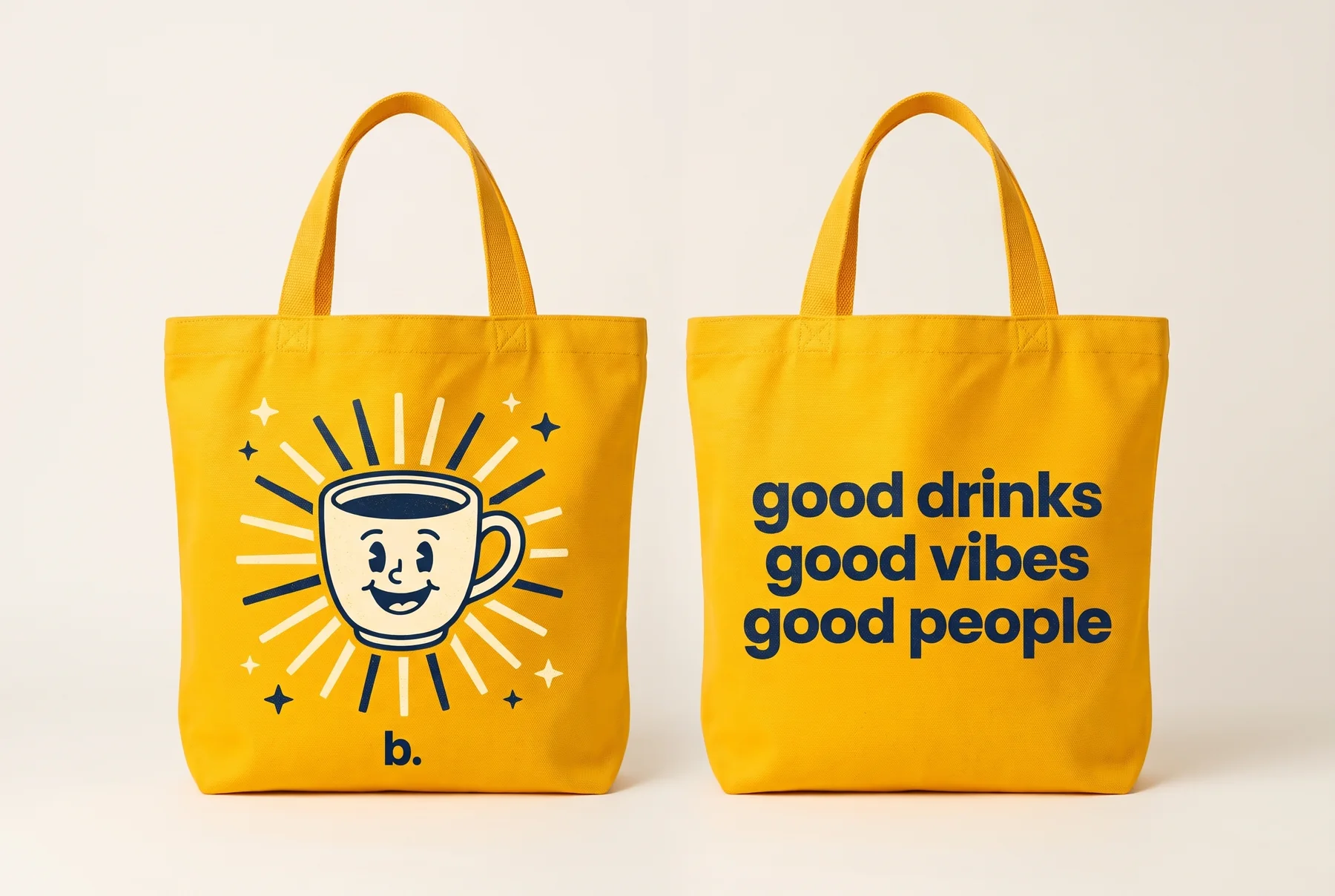
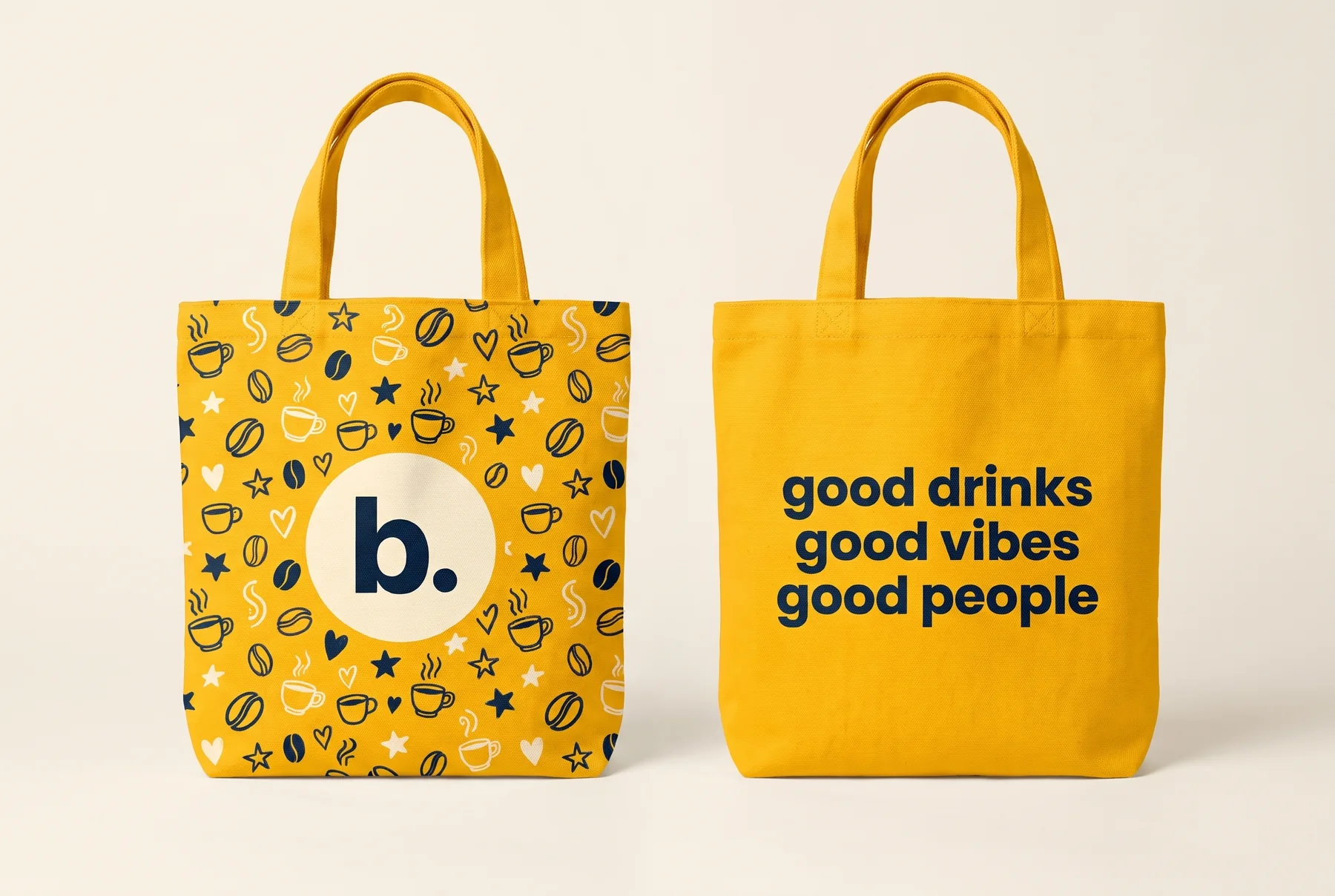
Totes, tumblers, cup sleeves and napkins, composed from the same kit of marks, colour and illustration.
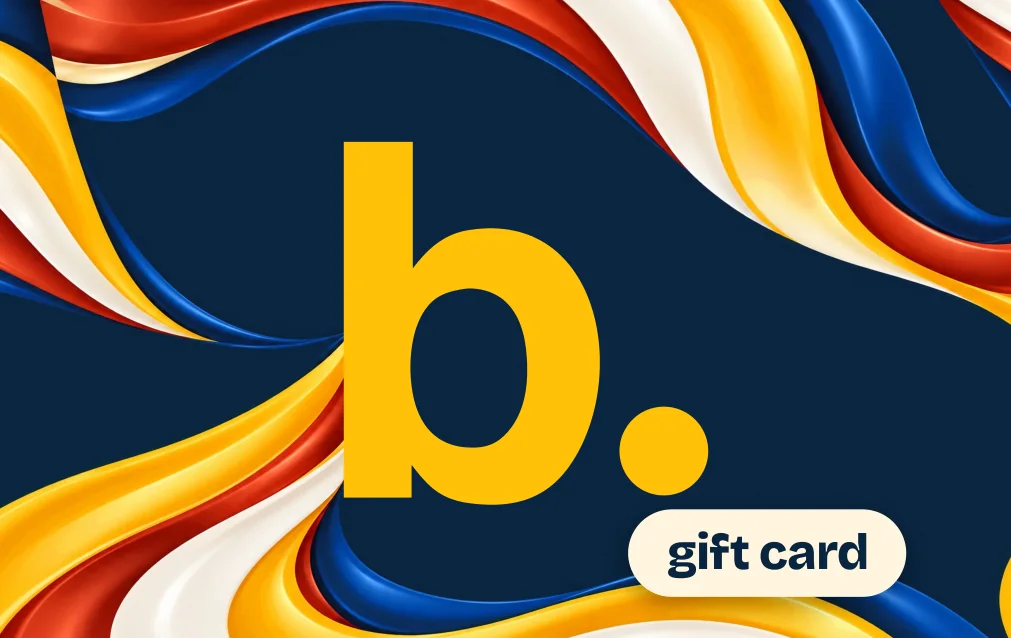
Cards
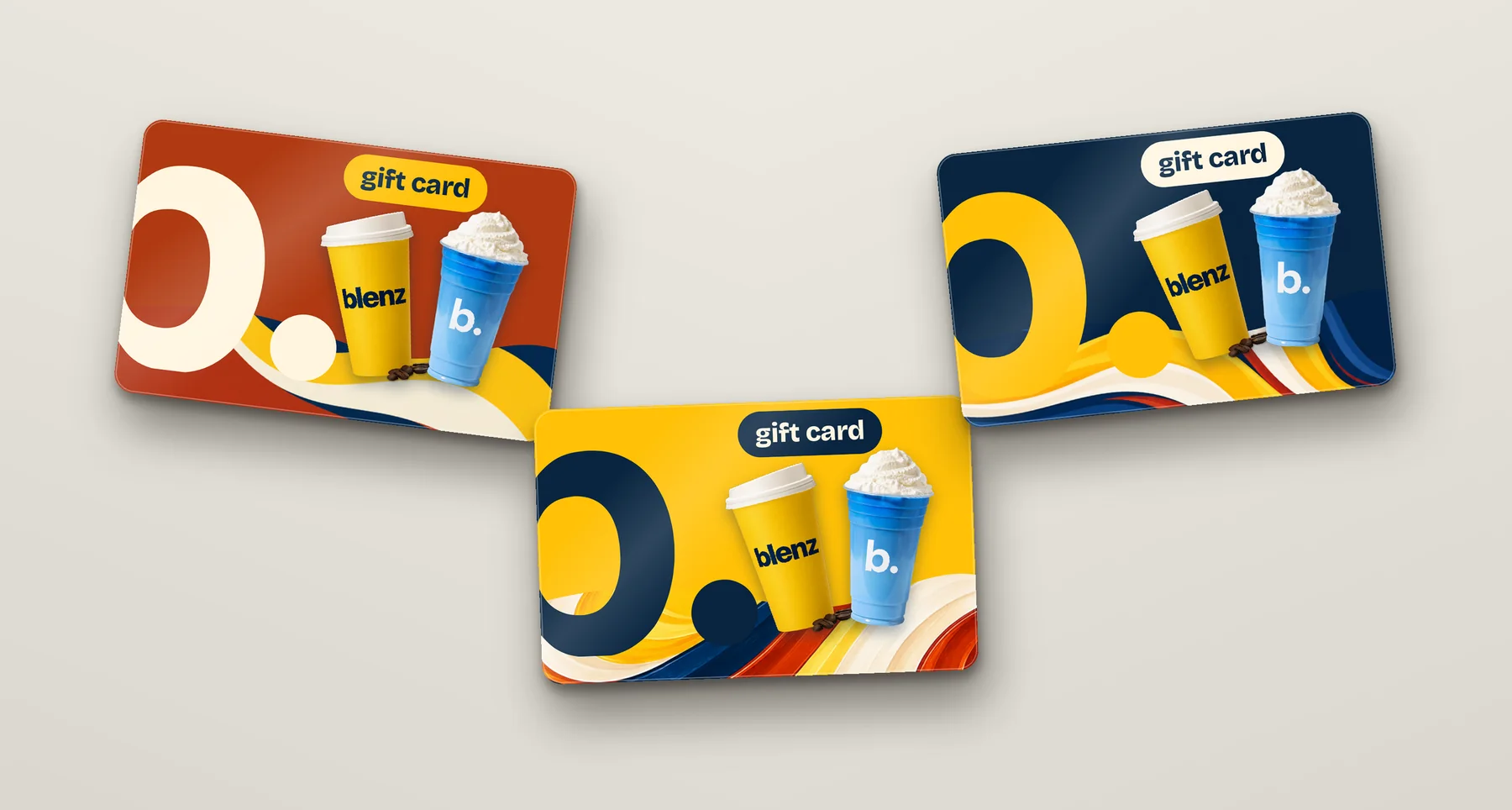
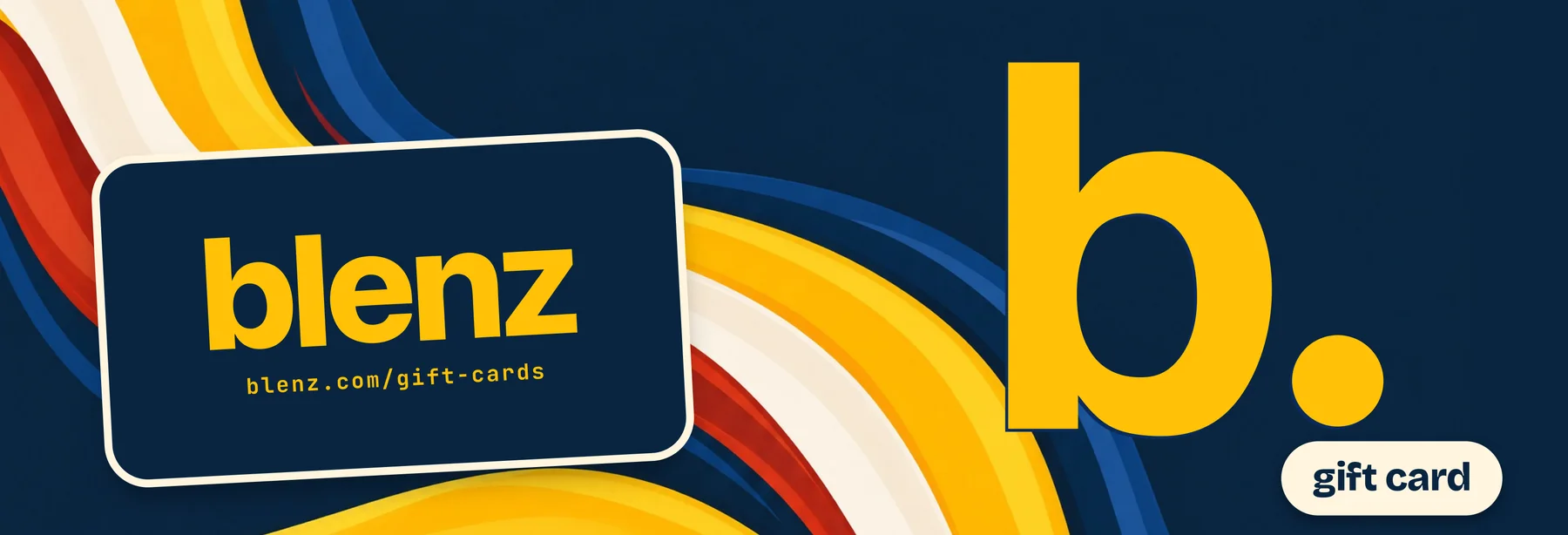
A gift card, a holder and a coupon, built from shared parts. The gift card alone went through 17 versions.
Menus
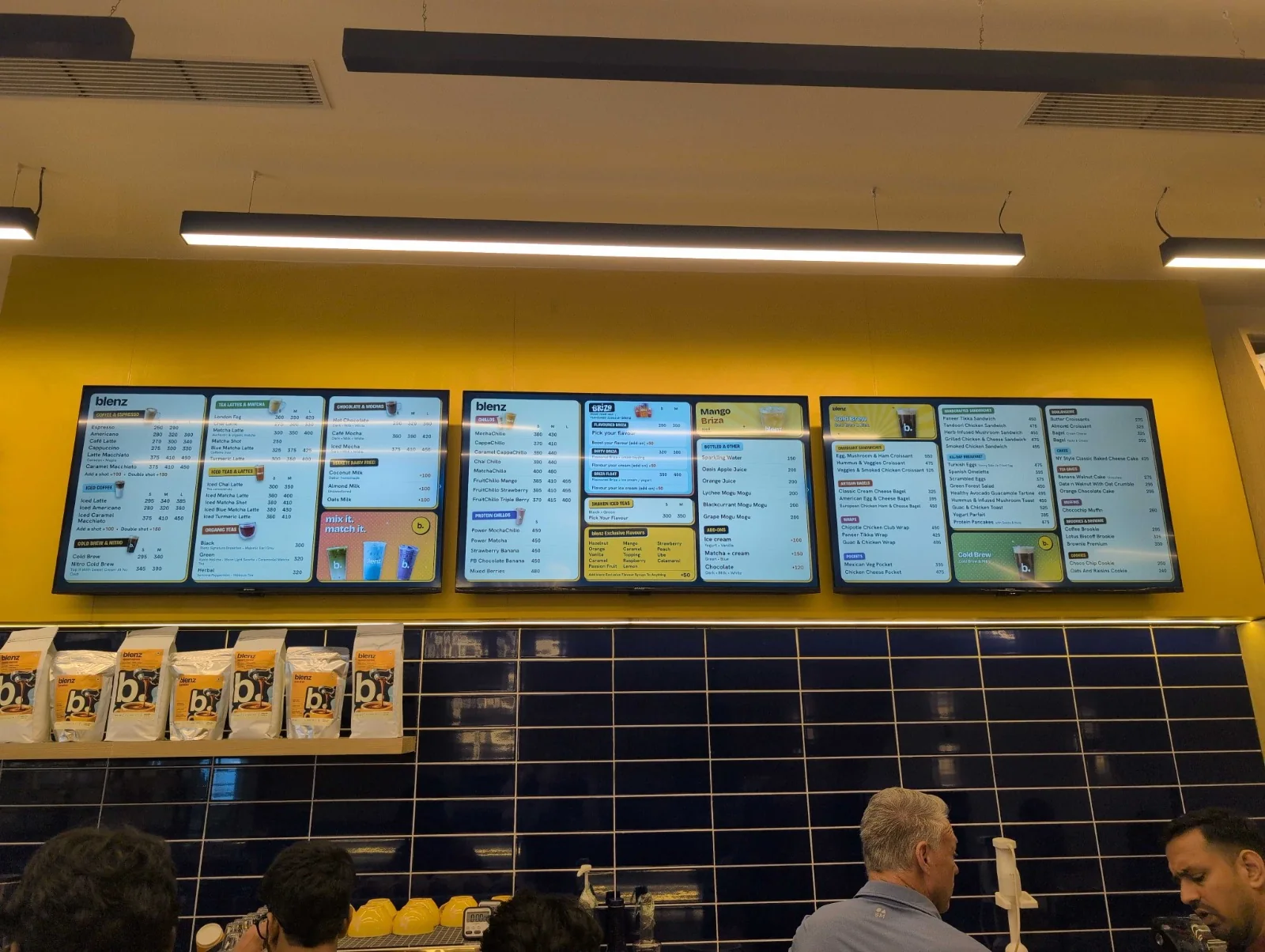
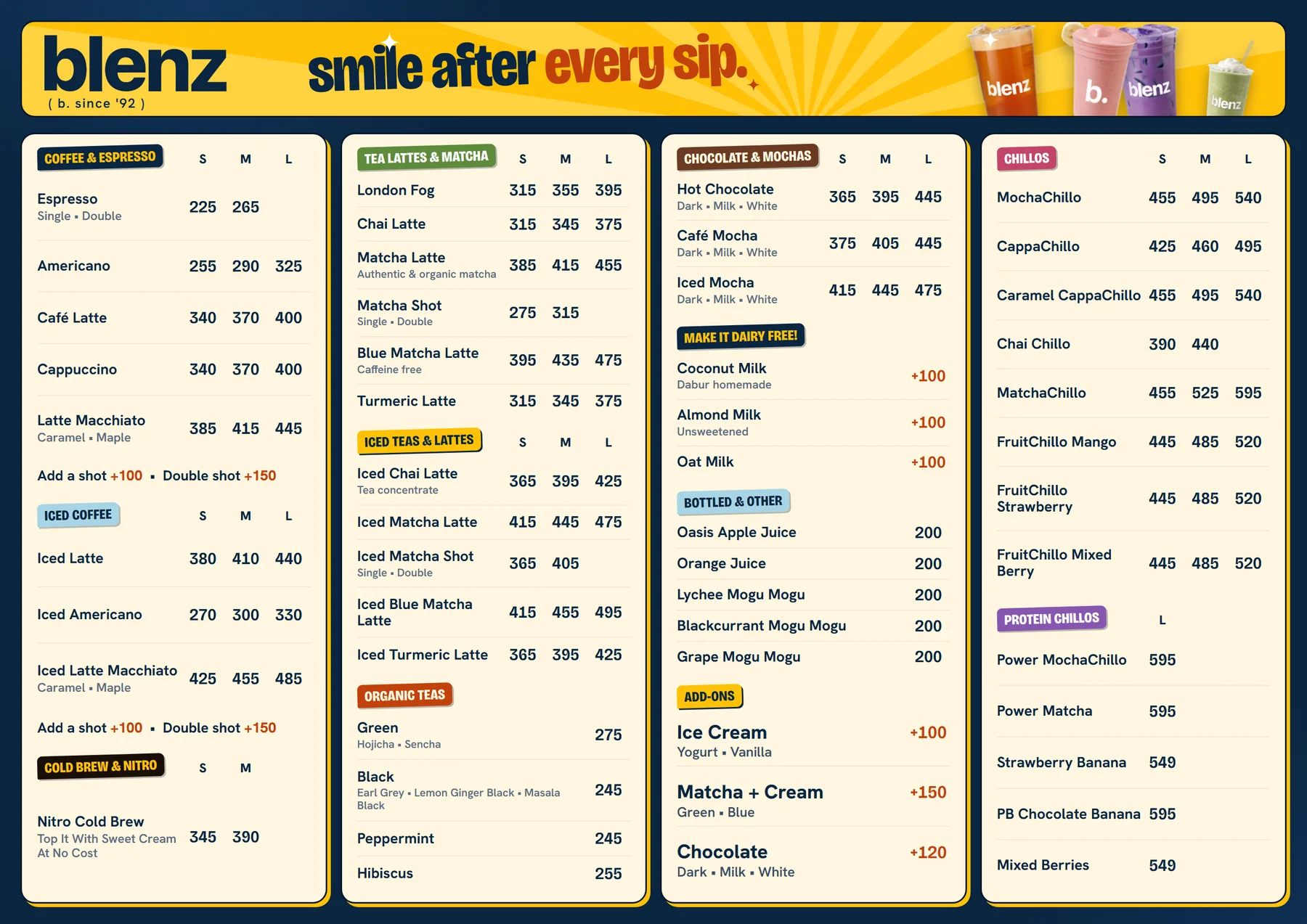
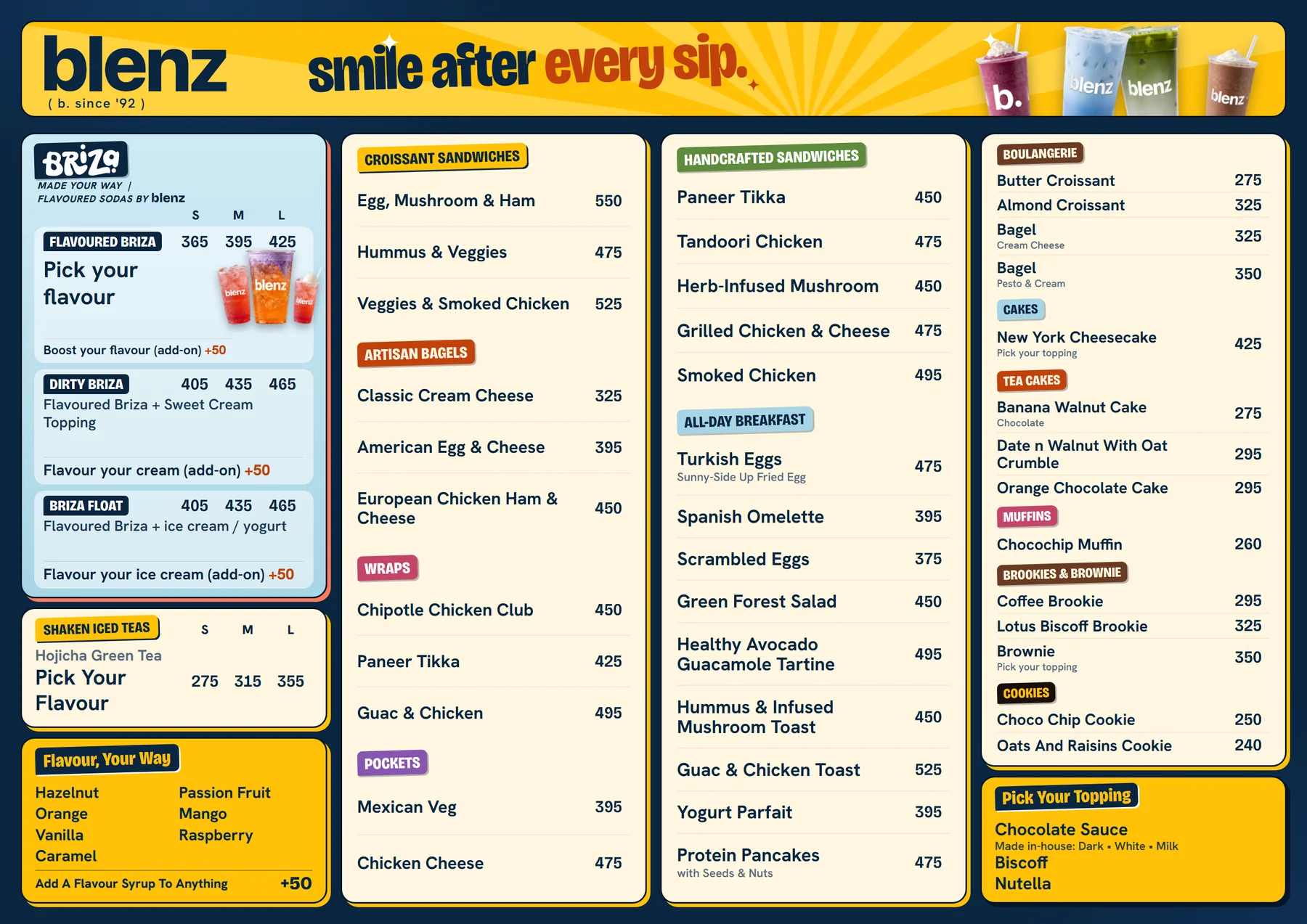
Three LED menu boards for the first stores in India, built as video loops, and an A3 print menu on the same layout grid. Every version, in order.
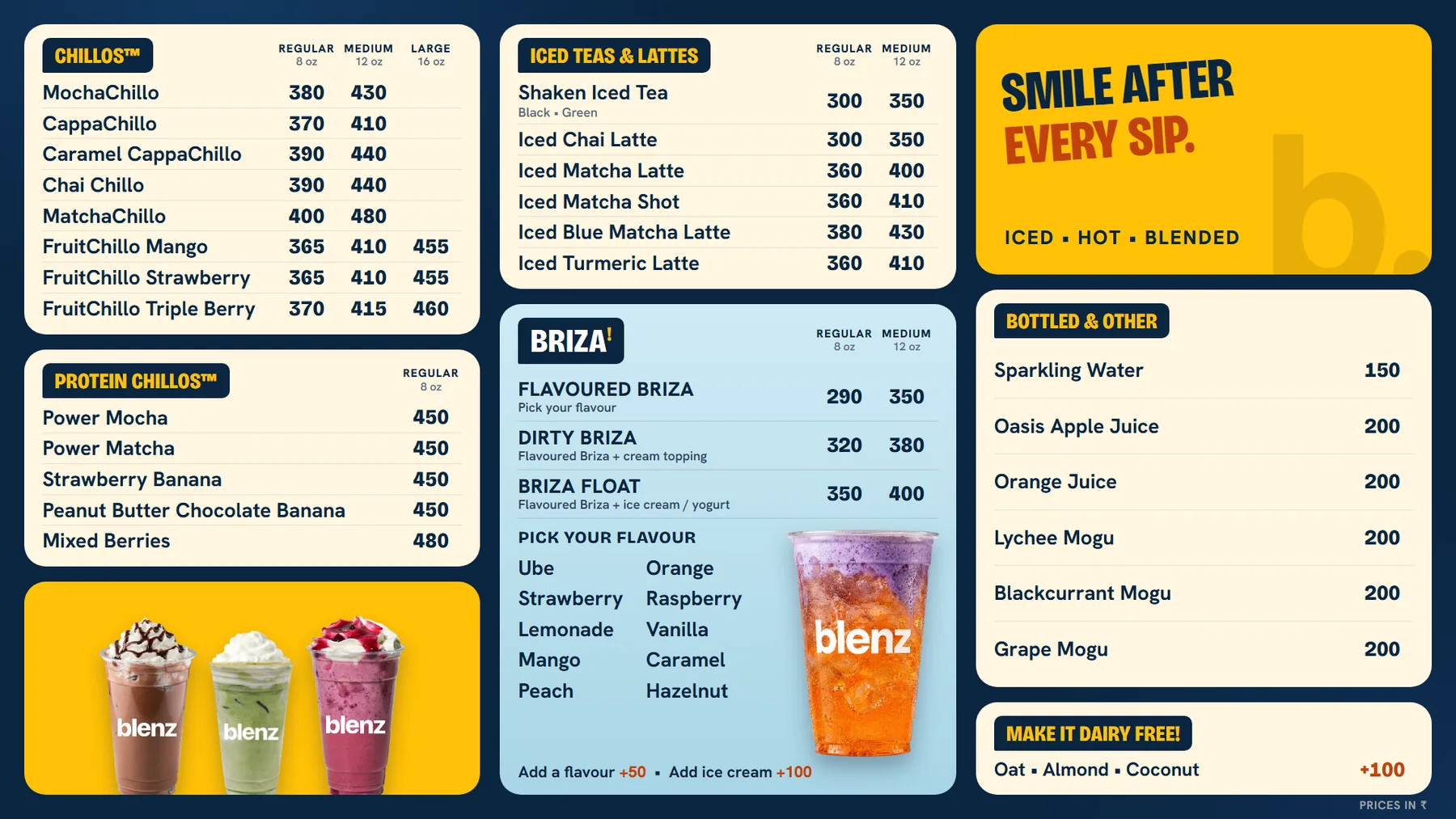
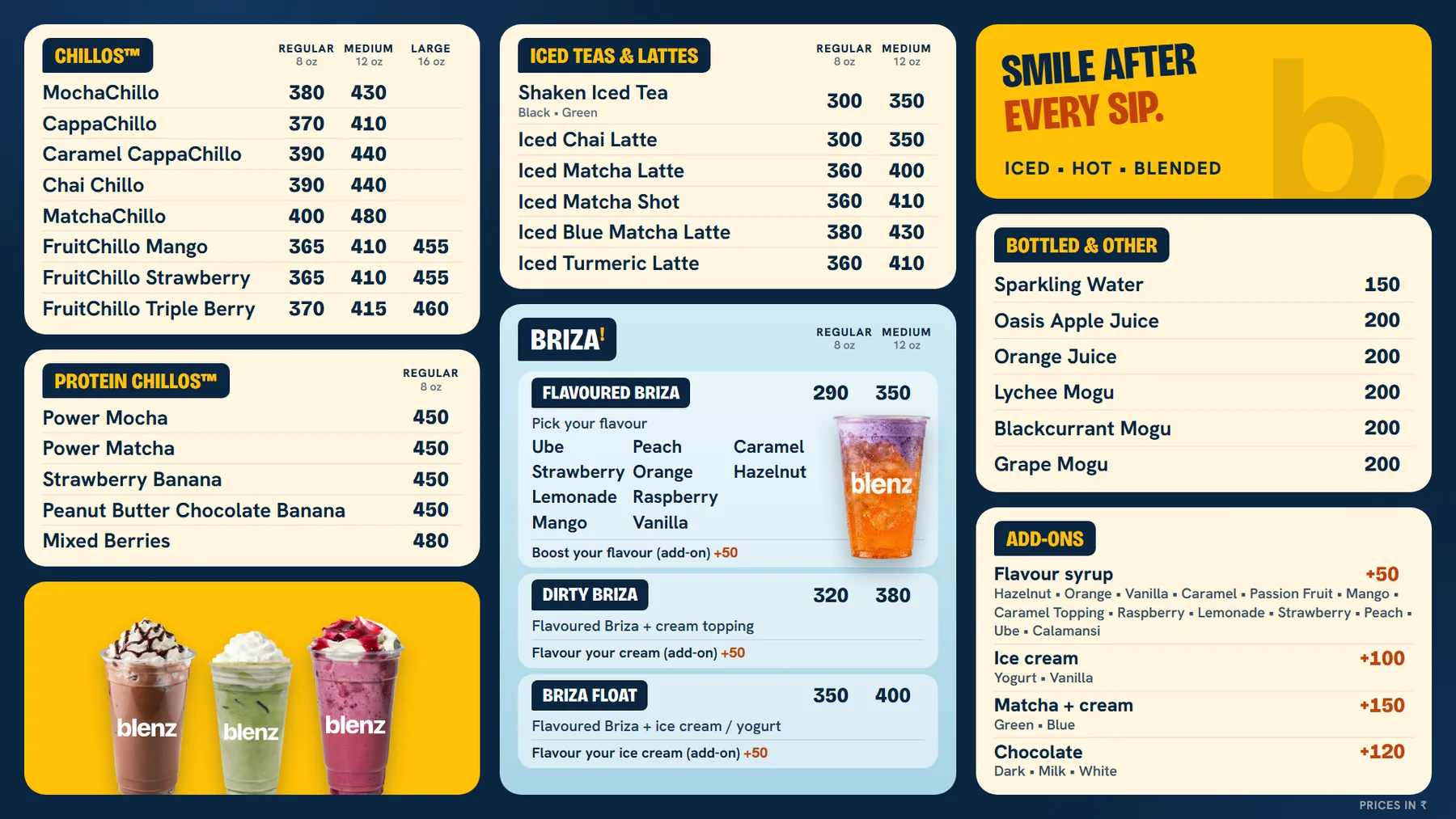
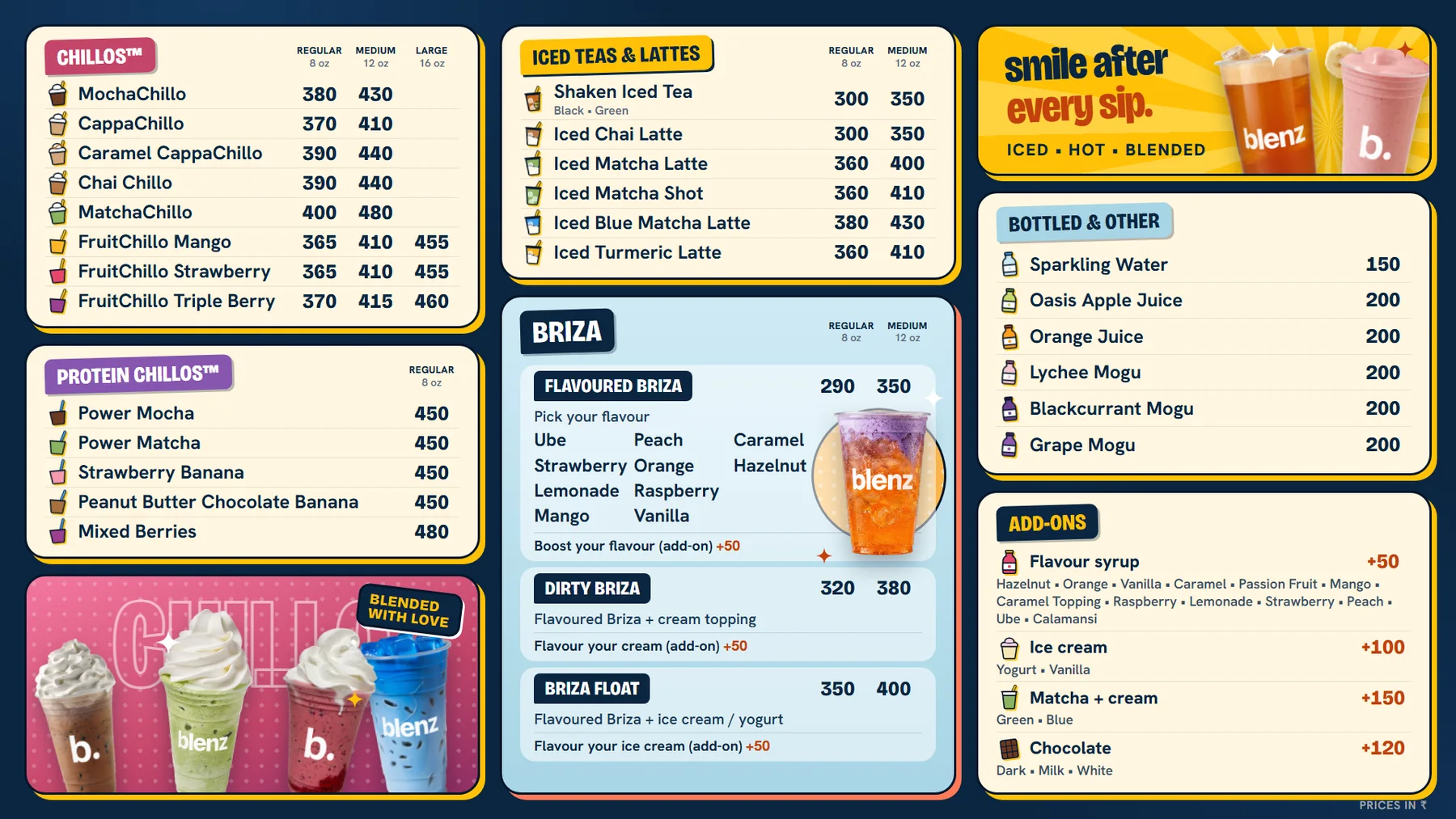
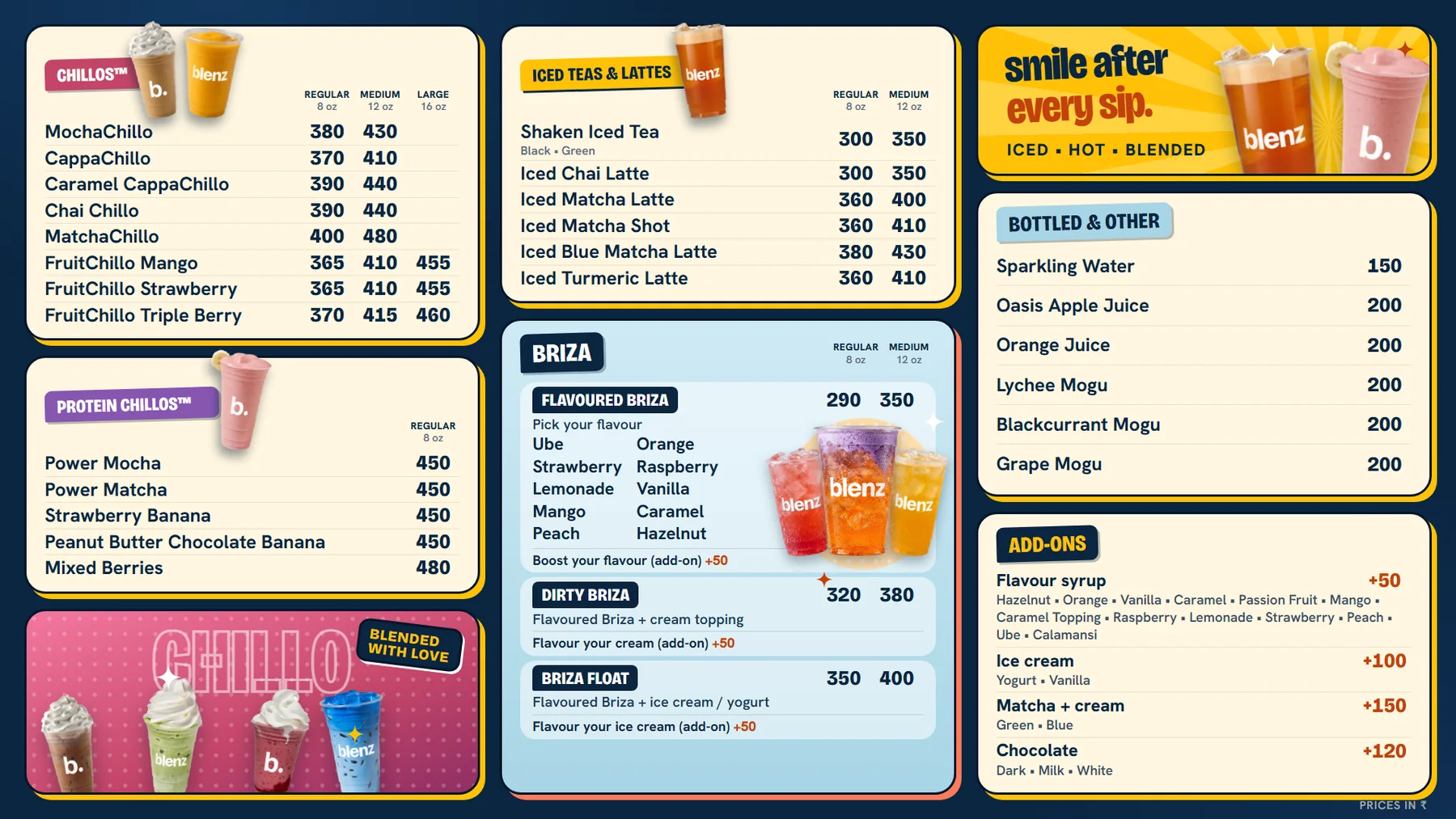
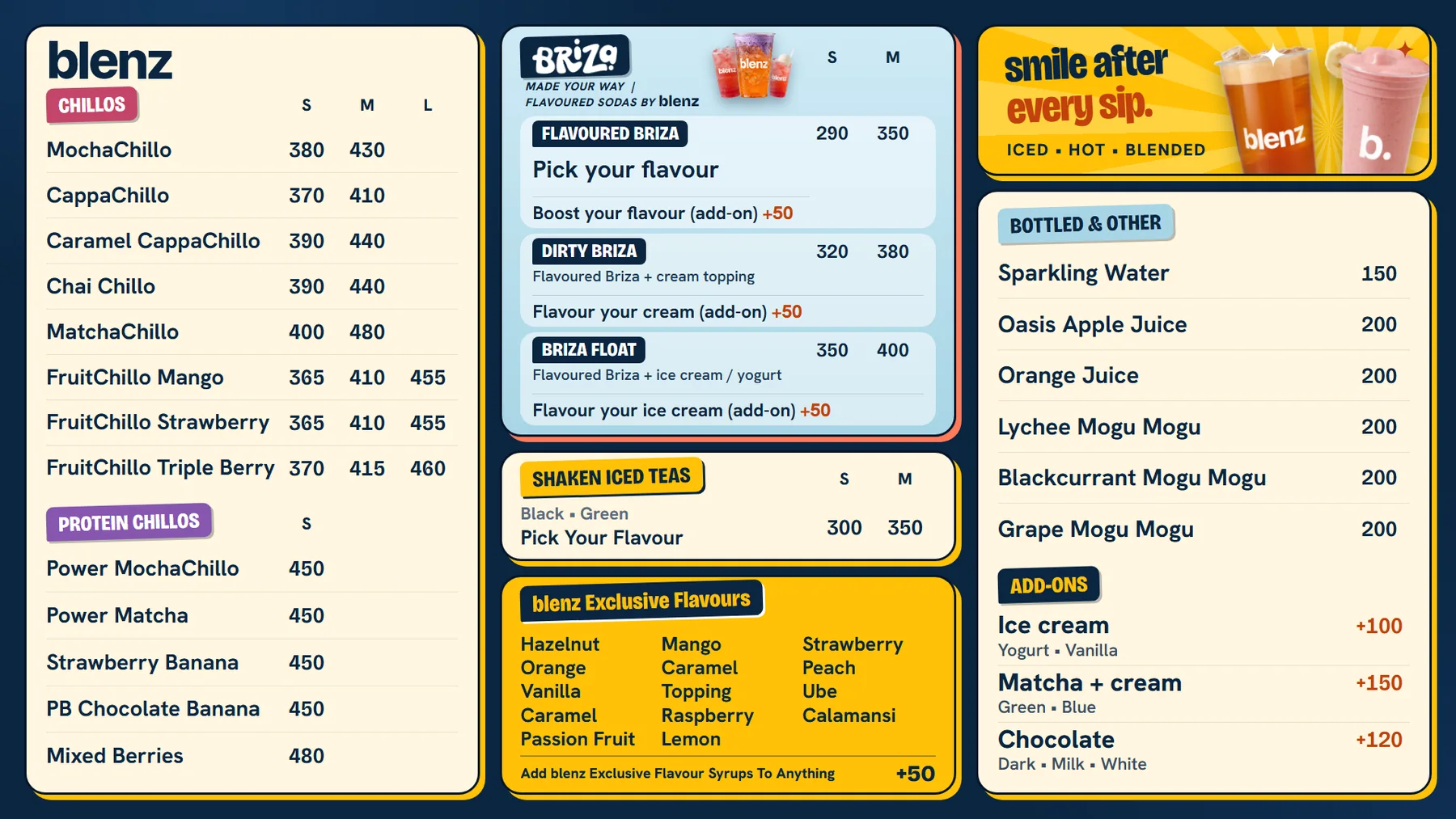
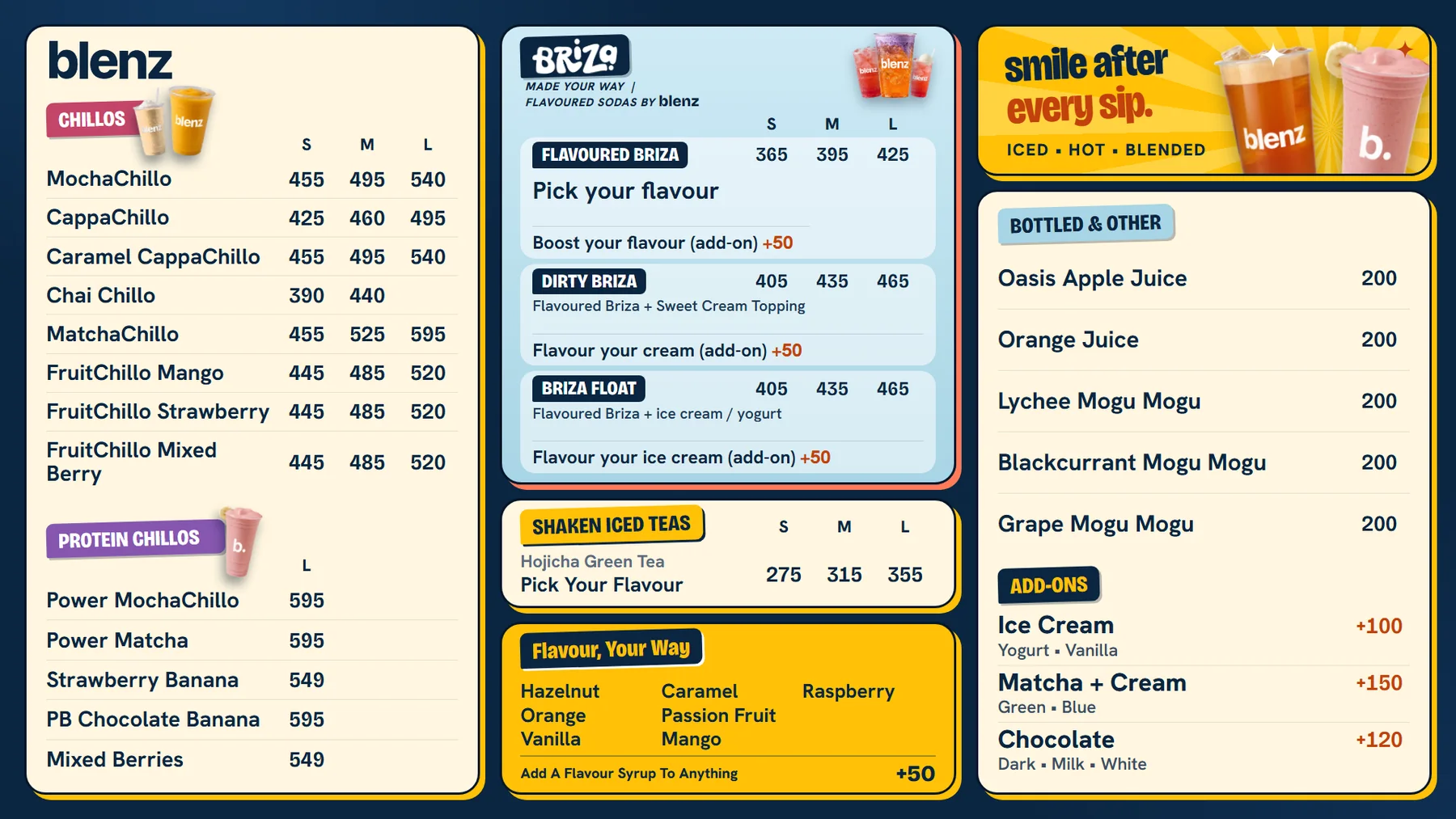
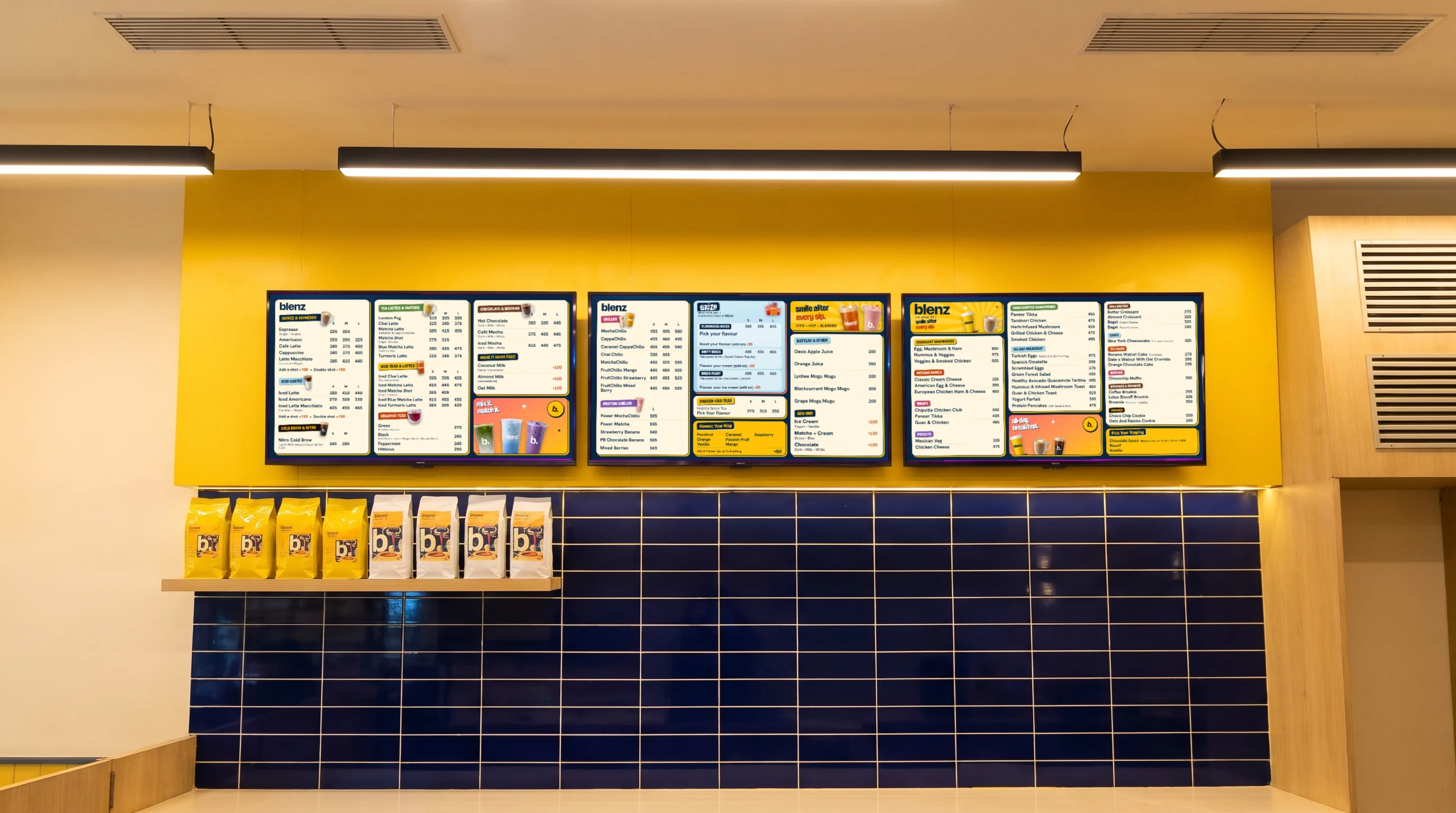
The menus on the TVs. Store photo cleaned up with AI; menu screens placed from the final design files.
Before and after
Drag to compare the original phone photo with the cleaned-up store.
 Before: phone photoAfter
Process
Systems thinking, in six stages. Each stage has a plain-language version beside it.
- 01
Discover
Understand the brand's heritage, its stores and every surface that needs to feel like one.
Look closely at what already exists before designing anything new.
- 02
Define
Set the brand rules: the b. mark, the guideline and the logo kit.
Agree what “on brand” means before drawing anything.
- 03
Build the library
Colours, type, the ribbon pattern, illustration, layout grids and product renders become reusable building blocks, organised as a modular, collection-based design language.
A kit of parts, like a design Lego set.
- 04
Compose
Assemble each deliverable from the kit: labels, totes, uniforms, cards and menus.
New pieces are put together from approved parts, not drawn from scratch.
- 05
Review and refine
Versions, side-by-side comparison and small corrections until each piece is right.
Look at it, fix it, look again.
- 06
Ship and scale
Print files, screen files and hosted links. The same kit extends to new items without starting over.
What works for one product carries to the next store or market.
The result is a brand that stays consistent while the work gets faster: each new deliverable inherits the rules instead of reinventing them.
AI as a design instrument, with a designer in charge
AI is used where it adds range and speed inside the brand framework: exploring directions, producing realistic mockups and store imagery, cleaning up photography, preparing and checking production files, and building small tools so the team can review and organise assets.
Art direction, taste, brand rules and final decisions stay human. Every output is reviewed, corrected and approved by the designer before it ships.
Brand rules and library
Marks, colours, type, patterns and layouts, agreed first.
AI-assisted exploration and production
Directions, mockups, photo clean-up and file checks, all inside the rules.
Designer review and sign-off
Art direction, taste and final decisions stay human.
Brand-direction renders and the store photo clean-up use generative AI; menu screens and print files are built from the final design files.
Led by Jastej Sehra, Senior Product and AI Strategist at FSH Design.
The brand online
Two public sites that put the whole brand in one place.
Brand guidelines
Logo, colour, type and usage rules in one place the whole team can open.
Open the guidelines site
Brand showcase
The brand-direction renders, shown as a walk through a store.
Open the showcaseFSH Creative Hub: the team's shared creative workspace for reviewing and organising brand assets.
Credits
- Client
- Blenz Coffee, Vancouver
- Studio
- FSH Design
- Design
- Jastej Sehra, Senior Product and AI Strategist
Created at FSH Design, an established Canadian design agency that serves brands and franchises. Design by Jastej Sehra, Senior Product and AI Strategist. This work was created as part of FSH Design's brand work for Blenz Coffee.
Want a brand system that reaches every surface?
From the guideline to the packaging, merch and the screens in the store. Designed at FSH Design by Jastej Sehra. Start with a free 20-minute call.